
You've taken antibiotics and are suddenly complaining about intestinal problems? Then you are not alone, as between 11% and 40% of all patients who have taken antibiotics subsequently report intestinal problems (Stiftung Gesundheitswissen). In this blog post, you will learn how to successfully perform a gut rehabilitation after antibiotics, how fermented foods can help, and how to rebuild your gut flora.
Content:
- Gut rehabilitation after antibiotics: Step by Step Guide
- Effects of antibiotics
- A disturbed gut flora: How do you notice it?
- Gut rehabilitation after antibiotics
- Gut rehabilitation through a Boulardii course
- Gut restoration with psyllium husks
- Rebuilding gut flora with fermented foods
- A step further: Flora Vida as fermented plant power
-
Aloe Vera for your gut
- Taking pre- and probiotics
- What can be done to avoid antibiotics
- Avoid infections
- Careful handling of (raw) meat
- Protection against sexually transmitted diseases
- For infections: React quickly with home remedies
- FAQ – Your questions about gut rehabilitation after antibiotics
Gut rehabilitation after antibiotics: Step by Step Guide
A gut rehabilitation after antibiotics is useful because antibiotics destroy not only pathogenic but also protective intestinal bacteria. The goal is to cleanse the gut, regenerate the mucous membrane, and then specifically rebuild the gut flora.
Before we go into detail, we have summarized the most important steps for successful gut rehabilitation after antibiotics:
- Start a Boulardii course already while taking antibiotics. It is best to buy the yeast in capsule form and then let it ferment to increase its bioavailability. You should take 1-2 spoonfuls of the fermented Boulardii daily for at least 2 weeks. The recipe can be found here.
- Then follows the daily intake of psyllium husks mixed with flax seeds and a splash of lemon. Toxins are then bound by taking zeolite or bentonite (mineral clay). Start with 1 teaspoon of mineral clay each, stirred in water.
- At the same time, an Aloe Vera juice cleanse is useful. Take 40 ml each of the direct juice daily in the morning and evening. More if needed. You can gladly continue this routine permanently.
- About 2 weeks later, you should start with probiotics. Ensure a balanced diet with many fermented foods, as well as 25ml FLORA VIDA daily. Ideally, this becomes your new lifestyle that permanently supports your body.
- How long it takes until your gut is fully functional again varies from person to person. However, a healthy lifestyle with regular intake of fermented foods, Aloe Vera juice and FLORA VIDA can promote your gut long-term.
Before we dive into the detailed guide, here's a brief interlude on antibiotics so you understand the background and why gut rehabilitation after antibiotics is so important!
Effects of antibiotics
In 1928, Alexander Fleming accidentally discovered penicillin – a bacteria-killing substance produced by a mold. A few years later, penicillin was already available as a medicine.
This discovery revolutionized medicine, and today all medications that fight bacteria are called antibiotics. They either kill bacteria or prevent their reproduction. Today, they are successfully used for the treatment of diseases caused by bacteria. A typical example is a bladder infection.
However, bacteria are by no means only bad for your body. On the contrary – your body needs bacteria to be healthy and function optimally. They are found in millions in many regions of our body, such as in the mouth, nose, or intestines.
Beneficial bacteria in the intestines form the so-called gut flora, which consists of about one hundred trillion microorganisms in humans. You can learn how the gut is connected to our immune system and our hormones in this blog post.

But what is the problem with antibiotics? They cannot distinguish between good and bad and damage or kill all bacteria – the good ones as well as the pathogenic ones. This often leads to intestinal problems or vaginal yeast infections, as the natural balance of the bacteria living there has been disturbed. According to the Center for Health, it is now considered proven that the gut flora is partially destroyed after antibiotic use, and the natural balance can only be restored after several months. As soon as the gut flora is damaged, the entire body is weakened, as over 70% of the immune cells are located in our intestines.
Due to these consequences for the body, antibiotics should not always be resorted to immediately, and the rule applies: as often as necessary and as seldom as possible.
Another problem is antibiotic resistance. The more often antibiotics are used, the higher the risk that resistant bacteria will develop and the antibiotic will no longer be effective.
This happens mainly when antibiotics are taken in the wrong dosage, too frequently, or for viral infections (they only help with bacteria, after all). Antibiotic resistance can have various consequences:
- Infections last longer
- Diseases are harder to treat
- Minor infections can become life-threatening
- Only a few antibiotics can still help, but they also have more side effects
A disturbed gut flora: How do you notice it?
Have you already taken antibiotics and are now wondering if your gut flora is out of balance? A disturbed gut flora is primarily noticeable through digestive problems. Other typical symptoms include:
- Food intolerances
- Bloating
- Diarrhea
- Constipation
- Abdominal pain
- Nausea
But even symptoms that you might not initially associate with the gut can indicate a disturbed gut flora. This is because our gut is not only responsible for digestion but also for other important processes in our body. These include:
- Production of vitamin K (for the formation of blood clotting factors)
- Absorption of vitamins from food pulp
- Support of the immune system
- Provision of energy to the intestinal mucosa
- Breakdown of pollutants
Since many complaints are often not directly attributed to a disturbed gut flora, it can take a long time until they are relieved. If they occur after taking antibiotics, it may make sense to perform a gut rehabilitation.
Gut rehabilitation after antibiotics
A gut rehabilitation (after antibiotics) is a gut cleanse, which aims to restore the balance of bacteria living in the gut. Good gut bacteria should be promoted and harmful gut bacteria eliminated. This makes particular sense after taking antibiotics.
Here, a distinction must be made between building up the gut flora and gut rehabilitation, which can easily be confused in everyday language. Building up the gut flora means settling beneficial gut bacteria, while gut rehabilitation refers to a thorough cleansing of the gut.
Here, the digestive system is detoxified and undigested particles and deposits are excreted, so that pathogenic intestinal bacteria no longer have a habitat. In addition, the intestinal mucosa is regenerated and the natural pH value of the gut is restored.
If the gut is damaged, gut rehabilitation is the important first step before starting to build up the gut flora. Because good bacteria cannot settle in an intact gut, and the whole effort would be in vain.
To make your gut functional again, it makes sense to rely on a healthy lifestyle and a balanced diet. We explain how you can proceed specifically step by step:
1. Gut rehabilitation through a Boulardii course
Step 1 of gut rehabilitation after antibiotics is the gentle removal of bad bacteria and fungi that have settled in your gut. This is achieved with the yeast Saccharomyces Boulardii, which is considered a probiotic substance and is used for improved digestive function, immune system support, and reduction of inflammation in the gastrointestinal tract. In the gut, it damages harmful bacteria and inhibits their growth, while simultaneously inhibiting inflammation. Simply explained, Boulardii creates space in the intestinal wall by gently removing harmful bacteria. This then allows good bacteria to settle in the next step.
Boulardii is not prescription-only and is also sold as a probiotic medicine. We recommend ordering the yeast in capsule form and then letting it ferment to increase the bioavailability of Boulardii. You should take 1-2 spoonfuls of the fermented Boulardii daily for at least 2 weeks. Instructions can be found in this video.
If you want to skip this process, you can also simply swallow the capsule, but you risk that only a fraction of the active ingredient actually reaches the gut.
Info: A Boulardii course can already be done parallel to taking antibiotics, as they do not affect each other.
2. Gut restoration with psyllium husks
All beginnings are difficult, especially when it comes to changing habits. That's why we recommend starting gut restoration simply but effectively: with psyllium husks!
Start each day with a mixture of psyllium husks and crushed flax seeds mixed with a splash of lemon. This combination acts like an internal broom: the soluble fibers of psyllium husks swell in the intestine, promote regular digestion, and serve as food for beneficial gut bacteria (prebiotic effect). Crushed flax seeds also provide insoluble fibers, mucilages, and omega-3 fatty acids, which soothe the intestinal lining and regulate bowel movements.
The lemon creates a slightly acidic environment that activates digestive enzymes and improves mineral absorption.
You can then take zeolite or bentonite to bind released metabolic residues and toxins. Both mineral clays act like a natural sponge: they have a high ion exchange and adsorption capacity and can thus bind heavy metals, ammonium, or other toxins in the digestive tract so that they can be excreted.
This combination creates a great, easy-to-implement basis for the subsequent building of a healthy gut flora.
3. Aloe Vera for your gut
A Chilean study investigated the prebiotic properties of the Aloe Vera plant and the polysaccharide aloverose and fructans found therein. The results showed that both polysaccharides serve as food for beneficial gut bacteria and thus the Aloe Vera plant can support the population growth of bifidobacteria in the gut.
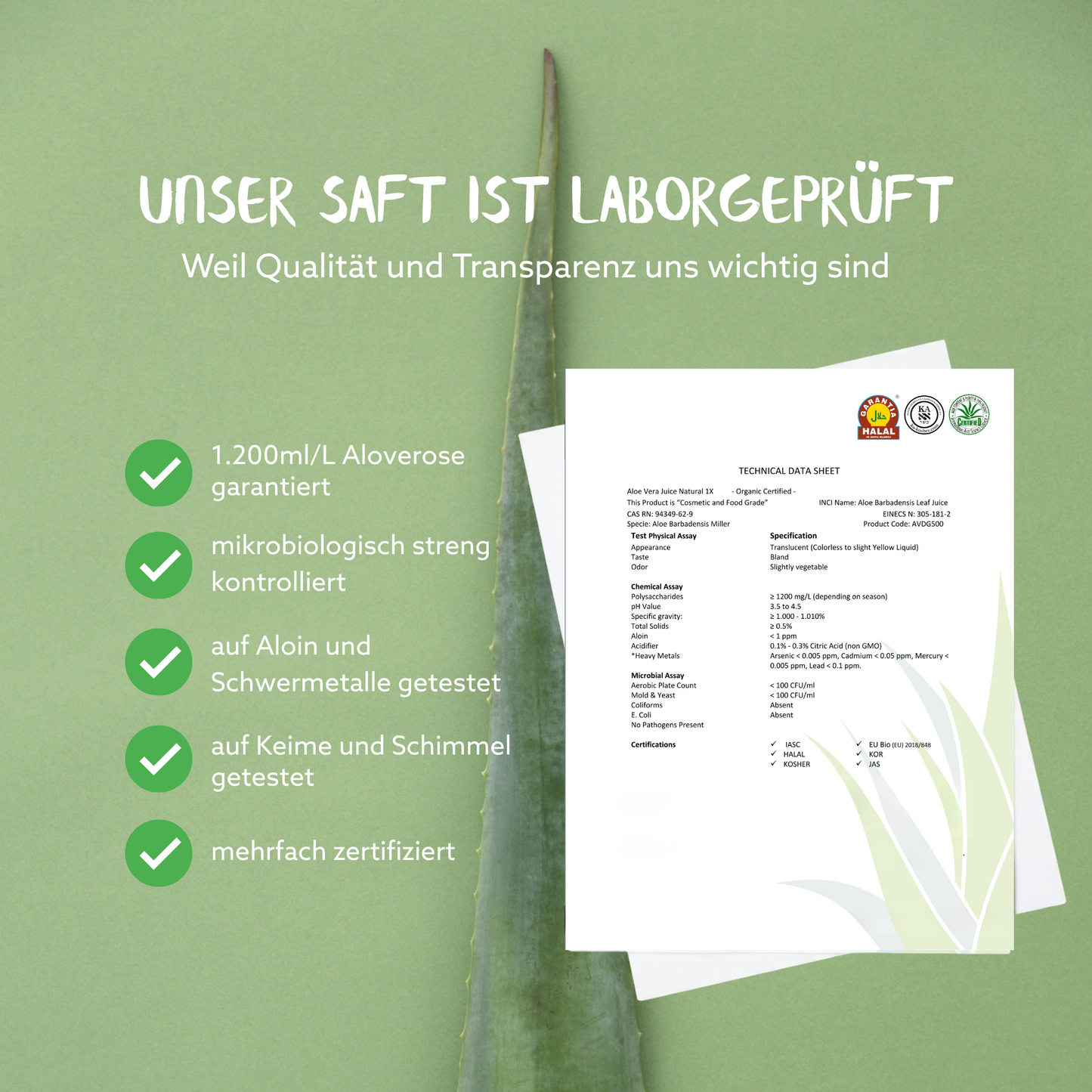
The ingredients of the Aloe Vera plant can do much more. It contains vitamins, trace elements and amino acids, which are used by our system as building blocks. Various supportive properties are attributed to these ingredients, including "Aloverose", which has shown antibacterial, antiviral and anti-inflammatory effects.

We recommend taking 40 ml of Aloe Vera Direct Juice daily in the morning and evening on an empty stomach or with breakfast or dinner. After opening, refrigerate and consume within 2-3 weeks.
4. Rebuilding gut flora with fermented foods
Fermentation has become a small trend, and many have heard the word before. But is there really so much to it?
The term comes from the Latin "fermentum", which means fermentation or fermented beverage. It describes the process of microbial and enzymatic conversion of organic substances, which can be achieved, for example, by adding microorganisms such as bacteria or fungi to food. However, microorganisms already present on the food or in the air can also be used.
Foods are made durable through the fermentation process, and their taste and consistency change. In addition, our gut can digest fermented foods much better, and they contain more vitamins A, B12, C, iron, magnesium, phosphorus, or folic acid.

Fermented foods offer many more benefits for our bodies. Researchers at Stanford University found in a study that fermented foods increase the diversity of gut bacteria (the microbiome) and reduce inflammatory proteins. Additionally, fermented foods are said to improve the body's immune defense and lower inflammatory mediators in the blood.
"A microbiota-targeted diet can alter immune status, and it represents a promising way to reduce inflammation in healthy adults," explained Dr. Christopher Gardner, Rehnborg-Farquhar Professor and Director of Nutrition Studies at the Stanford Prevention Research Center.
Due to the creation of probiotics in fermented foods, they are indispensable for your gut cleansing and the subsequent rebuilding of the intestinal flora.
Perhaps you were just wondering what the difference between probiotics and prebiotics is. We will briefly explain the difference: Probiotics contain viable microorganisms such as lactic acid bacteria, yeasts, or fungi, which you can find, for example, in fermented foods like FLORA VIDA. Prebiotics, on the other hand, are indigestible food components that promote the growth of good bacteria in the gut.
These fermented foods should definitely be on your diet plan:
- FLORA VIDA
- Sourdough bread
- Sauerkraut
- Yogurt
- Kefir
- Buttermilk
- Kimchi (fermented napa cabbage)
- Miso (fermented soybeans)
- Black tea
- Tamari (soy sauce)
- Kombucha (fermented tea)
- Olives
- Pickles
- Tempeh (fermented soybean milk)
Would you like to make fermented vegetables yourself? It's not that difficult! We will first explain the fermentation process and also have two recipes for you.
Fermentation: How it works
To ferment a food, a natural microorganism starter culture (such as yeast, good bacteria, or mold), which comes from the ingredients themselves or from the environment, is added to the food. This is then stored hermetically sealed. During fermentation, the starter cultures multiply, consume the available oxygen, and convert carbohydrates into alcohol or organic acids. This lowers the pH value of the food and preserves it.
Making your own Kombucha Tea*
Kombucha is a sweet and sour drink made from fermented tea. With just a few ingredients, you can easily make it yourself. Most ingredients can be found in the supermarket; a starter liquid, as well as SCOBY (the necessary kombucha mushroom), can be ordered online from Fairment.

Ingredients:
- 1 organic kombucha mushroom
- 200 ml starter liquid
- 12 g tea
- 100 g sugar
- 1.3 L water
Instructions:
- Bring 300 ml water (tap or still mineral water) to a boil.
- Then let the tea (we recommend a mixture of black and green tea) steep in the hot water for 8-10 minutes and then remove it.
- Add the sugar to the hot tea and stir until the sugar has dissolved.
- Pour the tea and water into a vessel you intend to use for fermentation.
- Then wait for the liquid to cool down. It is very important that the liquid is no longer hot, as this would kill the living kombucha culture.
- Now add the starter liquid and the tea mushroom.
- Cover the opening of the fermentation vessel with a kitchen towel or paper towel to protect the kombucha from mosquitoes and other insects.
- Place the vessel with your kombucha in a warm place. It is important that the room temperature is above 19 °C, with some fresh air and little light.
- After 5 days, you can taste for the first time whether the kombucha is sour enough. If it is, remove the tea mushroom and set it aside for now to bottle your finished kombucha. If it's not sour enough for you, wait a few more days.
- Once the kombucha has reached the desired acidity level, you can bottle 80% of it and seal it airtight. If you want further flavors or carbonation, it goes into secondary fermentation. All information can be found here.
- Once the kombucha is bottled, you should store it cold and then enjoy it.
- The remaining 20% of the kombucha is a new starter liquid for another batch of kombucha. Enjoy!
Fermented Vegetables – Making Your Own Celery Kimchi*
Kimchi is fermented Napa cabbage and comes from Korean cuisine. Apart from kimchi paste, however, there are no absolutely necessary ingredients, which is why Fairment has developed a recipe for celery kimchi. Since celery is an absolute superfood full of vitamins, minerals, antioxidants, and phytochemicals, we are big fans and want to share the recipe with you.

Important beforehand: Not all salt is the same! Pay attention to good quality and preferably use a good rock or sea salt. Table salt or iodized salt is not recommended!
Ingredients for 4 servings:
- 1 kg celery stalks
- 2-3 carrots
- 1 bunch radishes
- 2 spring onions
- 1 onion
- 20 g fresh garlic
- 30 g fresh ginger
- 1 apple
- 1 tbsp soy sauce
- Chili flakes
- Salt
Instructions:
- Wash the vegetables and cut the celery into medium-sized pieces. Grate the carrots and radish, and cut the spring onions into approximately 1 cm pieces.
- Wash or clean the onion, garlic, ginger, and apple, and coarsely chop everything before puréeing it into a paste in a blender. Add chili flakes, salt, and soy sauce to taste. It should, however, taste rather spicy.
- Put the chopped vegetables into a bowl and add 2% salt (20 g salt per 1 kg of vegetables). Then mix the vegetables with the paste and knead everything briefly. Your celery kimchi is ready!
- Fill your kimchi into a fermentation jar without air bubbles and place a weight on top to press the kimchi under the paste.
- Close the container and let it stand at room temperature for one week.
- After one week, your kimchi goes into the refrigerator to ferment for another 1-3 weeks. Enjoy!
5. One step further: FLORA VIDA as fermented plant power
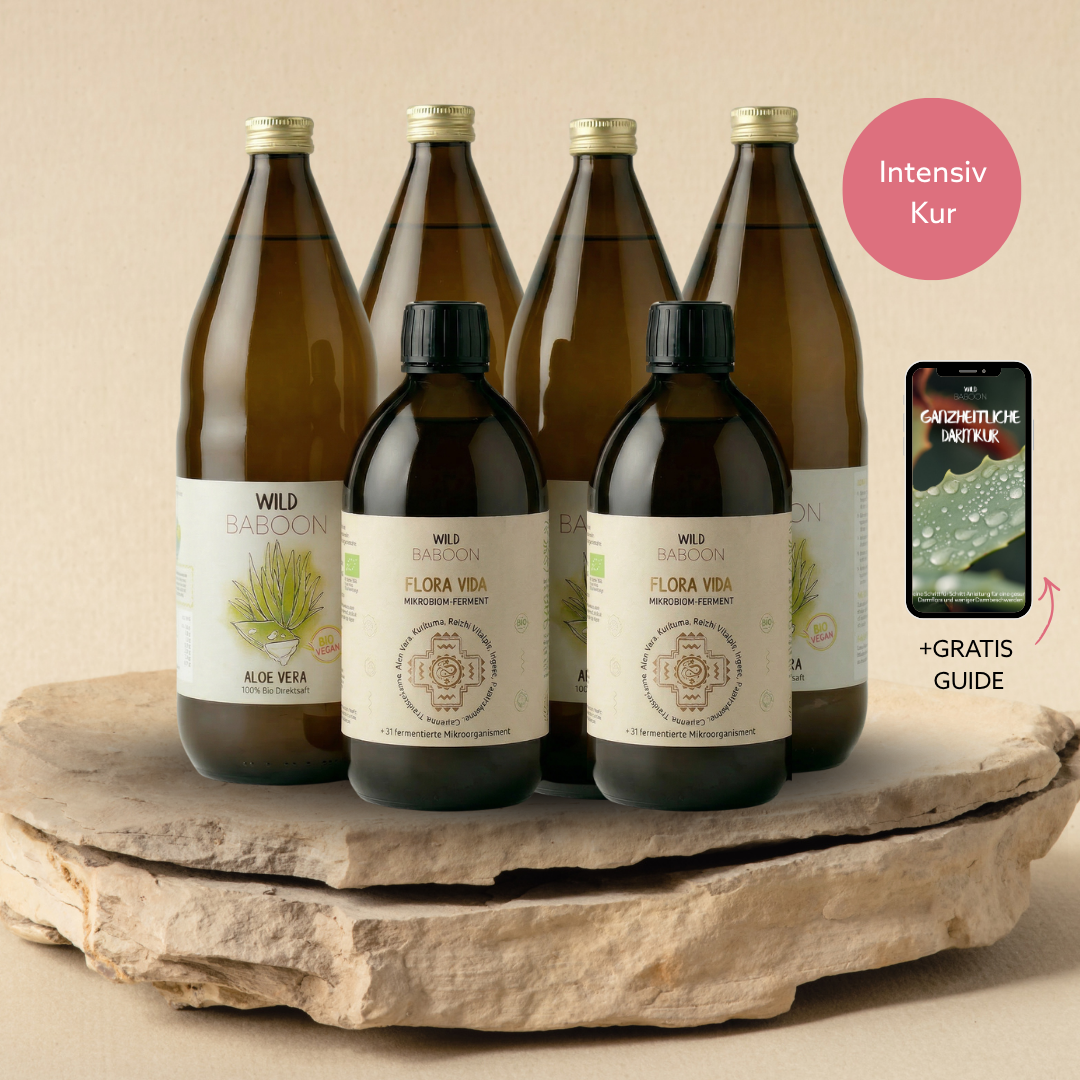
For those who want to leverage the positive effects of fermented foods even more targetedly, our microbiome ferment FLORA VIDA offers a smart solution. This multi-stage fermented product combines selected organic medicinal plants, vital fungi, and roots with 31 living microorganisms, a broad spectrum of enzymes, and high bioavailability.
The carefully selected organic ingredients are harmoniously balanced, creating a symphony of ancient natural powers, such as organic ginger and organic turmeric. This results in an intense taste experience with spicy-warm nuances of ginger and turmeric, a gentle heat from cayenne, and a mild note of aloe vera. Reishi and papaya seeds lend the drink a delicate, earthy depth, while ground grape seeds elegantly round off the flavor, which gains a pleasant, sparkling freshness through fermentation.
FLORA VIDA is therefore much more than just a complex of microorganisms. It is not a powder, extract, or capsule, but a living ferment made from real plants. Unprocessed, unheated, full of natural microorganisms, waiting to be used by you in everyday life.
Through fermentation, the microorganisms naturally form their own protective layer of exopolysaccharides, which safely carries them through stomach acid like a gentle buffer. This way, they reach the intestines in an active form, unlike bacteria in capsules that first need to be reactivated in the body.
One shot of FLORA VIDA daily is enough to provide you with approximately 830 million living microorganisms.
Application: Drink 25ml daily, pure or diluted in a little water. We recommend a course of at least 60 days (= 3 bottles of FLORA VIDA)

6. Intake of Pre- and Probiotics
We recommend that the rebuilding of your gut flora, as an essential step in gut regeneration after antibiotics, be done gradually.
First, start with Aloe Vera, as its prebiotic plant compounds serve as a natural food source for beneficial gut bacteria, thereby supporting a balanced microbiome. After about two weeks, you can supplement the intake with microorganisms (FLORA VIDA). The preparatory phase with Aloe Vera creates optimal conditions for the living cultures to flourish.
Afterwards, you can use prebiotics and probiotics in parallel. Just make sure not to take them at the same time, as Aloe Vera also has antibacterial properties.
Tip:
It's best to take probiotics at lunchtime before eating and not with other strong antibacterial substances.
Recommendation:
- 40ml Aloe Vera juice morning & evening on an empty stomach
- 25ml FLORA VIDA before lunch.
What you can do to avoid antibiotics
Antibiotics can be life-saving, and we are very privileged that we can obtain them so easily. However, this can also be the problem, because they are often prescribed for the wrong ailments and generally taken too often.
So you can remember that for colds, which are usually caused by a virus, you don't even need to think about antibiotics. They won't make you get better faster, as they only help with bacteria and instead unnecessarily disturb your entire balance.
However, sometimes antibiotics are the last resort to get healthy again. But to prevent it from getting to that point, here are some tips on how to avoid antibiotics.
Avoid infections
This tip is actually quite simple and logical: if you don't get sick, you don't need antibiotics. The best way to protect yourself from illnesses is to pay attention to your hygiene. Experts estimate that up to 30 out of 100 infections can be prevented this way. These points can help you:
- Wash your hands with water and soap (especially before eating, after contact with animals, after touching raw meat, and after using the toilet)
- Dispose of your used tissue immediately after blowing your nose and wash your hands
- Cough into your elbow instead of your hand
- Try not to constantly touch your face, especially your eyes, nose, and mouth
- Wash clothes and towels regularly (preferably above 60 °C)
- Wash fruits and vegetables thoroughly
- Ventilate regularly

Careful handling of (raw) meat
Did you know that some antibiotic-resistant germs come from our animal foods? Especially in mass animal husbandry, antibiotics are frequently used – according to Deutsche Umwelthilfe, for example, 85 out of 100 chickens receive antibiotics during fattening. Resistant germs can survive treatment, multiply in the intestine, and still be present in raw meat in our kitchen.
Therefore, you should definitely observe the following points when handling raw meat:
- Wash your hands before and after (click here for our natural soaps)
- Use the knife and cutting board exclusively for raw meat and clean them afterwards
- Chill the meat
- Do not process meat if you have a wound on your hands or fingers
Protection against sexually transmitted diseases
Sexually transmitted diseases such as chlamydia, gonorrhea, and syphilis are caused by bacteria and are fought with antibiotics. However, it is becoming increasingly difficult to treat these diseases successfully. This is often due to them not being recognized, but also to the resistance of the bacteria.
To prevent this from happening in the first place, you can protect yourself from sexually transmitted diseases with condoms and also get regular check-ups to be safe.
For infections: React quickly with home remedies
If all your precautions have been in vain and you've still fallen ill, it usually helps to react quickly. Rest yourself and your body, and find out how various home remedies can help.
In the case of a bladder infection, for example, you should drink plenty of fluids, preferably nettle tea, rest, and ensure sufficient warmth from the first signs of pain when urinating.
Sometimes that's enough to prevent a worse infection and thus antibiotics.

FAQ – Your questions about gut restoration after antibiotics
What is gut restoration after antibiotics?
A gut restoration is a gut cleanse that aims to restore the balance of bacteria living in the gut. Good gut bacteria should be promoted and harmful gut bacteria eliminated.
When is gut restoration after antibiotics advisable?
Gut restoration after antibiotics is advisable when digestive problems such as bloating, diarrhea, or constipation occur after taking them. Antibiotics can disrupt the natural balance of the intestinal flora, which is why targeted restoration helps to stabilize the gut and support the regeneration of the intestinal lining.
Why should one do a gut restoration after antibiotics?
Current findings show that taking antibiotics alone is enough to throw your microbiome out of balance for several months. To restore this balance, you should do a gut restoration.
How do you know if your gut flora is damaged?
Typical symptoms include food intolerances, bloating, diarrhea, constipation, abdominal pain, and nausea. But other physical complaints that at first glance do not seem related to the gut can also indicate this.
How long does gut restoration take after antibiotics?
For a thorough gut restoration, you should plan for a total of about 6 to 8 weeks. In the first two weeks, a Boulardii course is recommended to relieve the gut and push back unwanted germs. This is followed by an Aloe Vera juice course, which supports the intestinal lining and creates a favorable environment for rebuilding. After 2 weeks, you start with probiotics or living microorganisms for at least 3 to 4 weeks to specifically stabilize the gut flora.
It is advisable not to stop abruptly, but to provide long-term support for the gut through a pre- and probiotic-rich diet, which sustainably maintains the achieved balance.
How can I rebuild my gut flora after antibiotics?
To rebuild your gut flora, a fiber-rich diet with fermented foods is particularly important. These provide natural probiotics that contribute to the diversity and stability of the microbiome. Additionally, prebiotic plant substances, such as those found in Aloe Vera, can support the growth of beneficial gut bacteria and promote a favorable gut environment.
What should you not eat during gut restoration after antibiotics?
During gut restoration, you should avoid ready meals and highly processed foods, as well as a lot of sugar, meat, coffee, and alcohol. Reducing these foods is also beneficial for a healthy lifestyle afterward.
How long does it take for gut restoration after antibiotics to work?
Gut restoration usually takes several weeks or months. First effects can appear after 2-3 weeks, but it generally varies from person to person.
What is the difference between gut restoration and gut cleansing?
Often both terms are used synonymously. Strictly speaking, however, there is a difference: a gut cleansing is the complete, one-time emptying of the bowel, for example, before a colonoscopy, while gut restoration aims to restore the balance of bacteria and thus also the functionality of the gut.
Why is fermenting so healthy?
Fermented foods contain more nutrients, and Stanford University scientists found that they increase the diversity of gut bacteria (the microbiome), reduce inflammatory proteins, and improve the body's immune defense.
Which fermented foods are good for the gut?
Fermented foods include sauerkraut, yogurt, kefir, sour milk, kimchi (fermented napa cabbage), miso (fermented soybeans), black tea, tamari (soy sauce), and kombucha (fermented tea).
*Recipes from Fairment