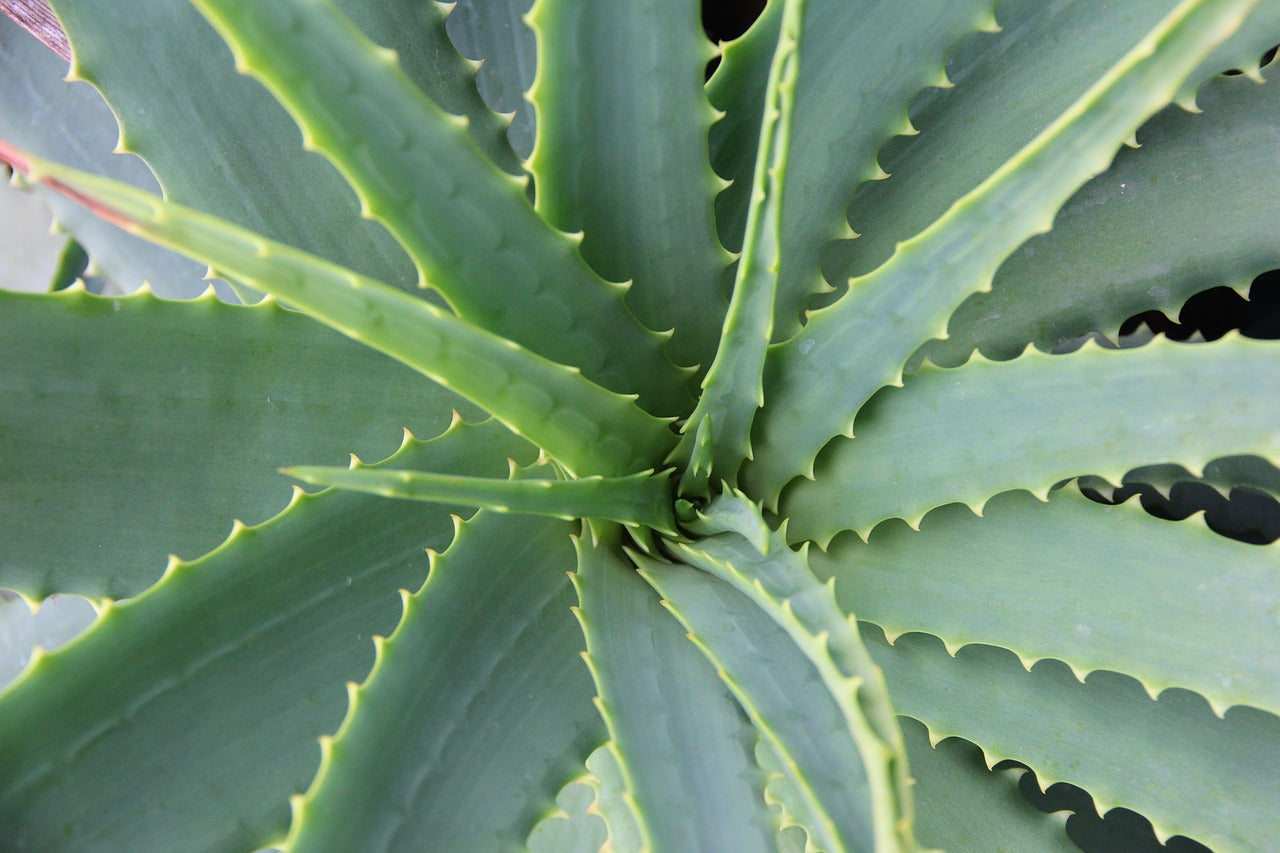
The Aloe Vera Plant
Learn about the most important characteristics of Aloe Vera Barbadensis Miller in this article and understand what matters when it comes to quality.
Aloe Vera is used worldwide in numerous care products. Additionally, Aloe Vera juice for drinking is gaining increasing popularity - and for good reason.
But what makes Aloe Vera so special? You can find out more about its origin, proper care, and the effects of juice and gel on this page.
Want to learn more about aloe vera? Then tune in to the "Kraut im Ohr" podcast episode with our founder Nici! 🌱🎧
➞ Please note that due to the so-called Health Claims Regulation, which uniformly regulates health-related claims, we are not permitted to report fully on the potential of the Aloe Vera plant or make specific statements about its effects.
However, to support the effectiveness of our products and provide transparency, we have compiled relevant studies for you, which you can find further down in the text.
We would also like to invite you to conduct your own research to discover the diverse properties this special medicinal plant has to offer.
1. History of Aloe Vera
The Aloe Vera plant, also known as the desert flower, has been used for millennia as a natural remedy according to records from various peoples. Traditionally, it was used, for example, in highly developed cultures to maintain normal body function and for beauty purposes. The ancient Egyptians called it the "plant of immortality," and in cultures in Latin America, it was revered as a medicinal plant. There, it is still recognized as such to this day.
2. Aloe Vera as a Houseplant: How to Care for It Properly
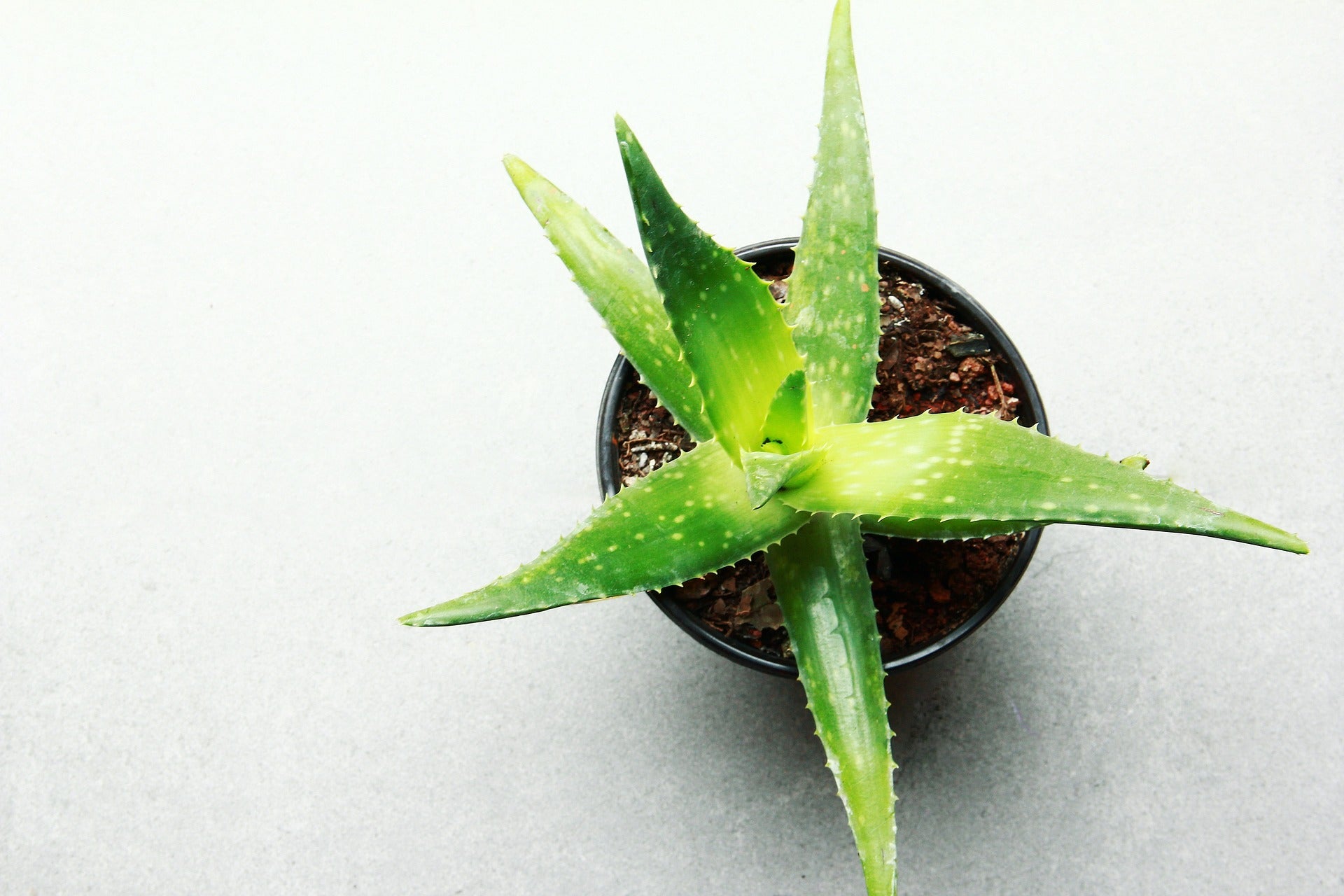
As a houseplant, aloe vera has many advantages, for example as an SOS helper if someone in the family gets hurt or cut. But it also ensures a good indoor climate. Aloe vera is one of the few plants that should also be kept in the bedroom, as, according to a NASA study, it cleans the air and thus contributes to good sleep. To ensure that the aloe can enrich your home for a long time, it is important that you do not water it too often. Since aloe vera belongs to the succulents, it is sufficient to water it as soon as the soil feels dry. You can find out more in our blog post about Aloe Vera as a houseplant.
3. How do you harvest an aloe vera plant?
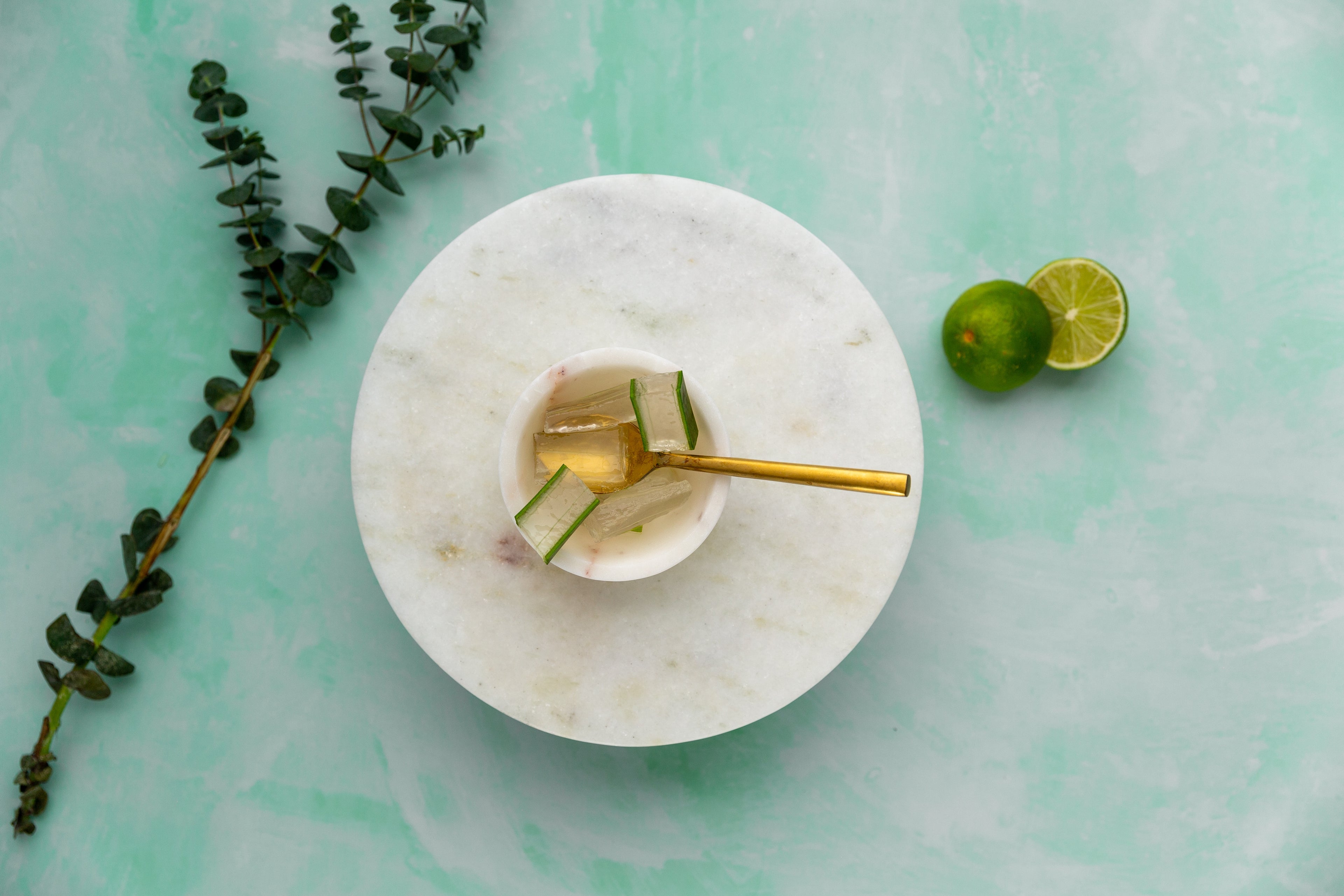
In general, you can harvest the leaves of your aloe vera plant at home yourself after two to three years, or earlier. To do this, cut them off as close to the stem as possible, remove the rind, and place the "fillet" in cold water to rinse out excess aloin. Aloin is a bitter substance that protects the plant from predators. In large quantities, this substance can have a laxative effect in the human body and even be poisonous. Most of the aloin is located between the rind and the leaf gel and is usually automatically removed when the rind is removed.
Once you have placed the gel-like piece in cold water for at least 2-3 hours, you can discard the water and now process the aloe piece into a very gel-like juice with a blender. You can then use this aloe juice for smoothies or your own cosmetics. You can harvest the leaves all year round, by the way.
💡TIP: If you want to save yourself the trouble and be sure that your aloe vera juice contains no aloin and high levels of the desired substance "Aloverose" or "Acemannan", then you can opt for quality juices, such as our Aloe Vera Juice. We will tell you why aloverose is so important in the next section.
4. Why the Aloerose Content Is Crucial
Many people know about the benefits of the aloe vera plant, but few know about the key component of aloe vera. Aloverose, also known as Acemannan, is a complex carbohydrate that can have positive effects on health. It has been studied in a number of studies as an immunomodulator, wound healing promoter, and as an agent with antiviral and antimicrobial properties. We have linked some interesting studies for you below.
It is therefore not surprising that aloe vera is considered a super plant and can be found in a variety of health and wellness products around the world. Although aloe vera has been used for thousands of years, science is still at the beginning of discovering the full potential of this remarkable plant.
📝 Note: the longer the plant can mature in good soil with many hours of sunshine, the higher the aloverose content and nutrient density. It was particularly important to us to work with a partner farm that ensures the plants can develop optimally. Mexico is a very good location for growing aloe vera. This is not least due to the nutrient-rich soil and ideal climatic conditions.
💡TIP: When buying an aloe vera juice, always check whether the aloverose content is stated. If you don't find the information on the label of a product, there is a risk that it is an inferior juice. Our juice, on the other hand, contains a value between 1200-1800mg per liter depending on the season and harvest time! Therefore, invest a few euros more for a good organic direct juice, instead of a cheaper variant, of which you would need double or triple to get the same amount of aloverose.
5. What are the benefits of using aloe vera?
The aloe vera plant has been shown to contain over 200 nutrients such as vitamins, minerals, and amino acids. Our bodies need these nutrients to function normally and obtain them from the food we consume.
If you want to try the plant for yourself, it is advisable, as with many natural products, to integrate regular intake and body care into your routine.
A successful and holistic aloe vera routine includes aloe vera juice, aloe vera gel, and a few drops of prickly pear seed oil to round off your care. In our shop, you can take a closer look at our product selection.
If you are interested in testing the routine for yourself, we have put together a beauty set where you get our Ayni natural soap for free. We want to encourage you to take the first step! You will love your new routine! More about the Beauty Set.
6. Why do I even need the nutrients in aloe vera?
7. How does an aloe vera juice regimen work?
An aloe vera juice regimen is a simple way to do something good for your body. Our pure aloe vera juice from Wild Baboon can be easily integrated into your daily routine: simply take 40 ml each morning and evening on an empty stomach, ideally over a period of 5 to 10 weeks.
Unopened, the aloe vera juice can be stored for up to 18 months, so you can keep unopened bottles unrefrigerated for a long time. After opening, it belongs in the refrigerator and should be consumed within 2 to 3 weeks to ensure its freshness.
You can also adjust the dose to your individual needs – listen to your body, which will signal what it needs. Even if the taste may be unfamiliar at first, many of our customers report that they got used to it after a few days and increasingly appreciate the juice.
Check out the reviews of real customers who report on their experiences with Wild Baboon Aloe Juice on our Aloe Vera Juice page and start your own aloe juice regimen in the next few days!
8. How does the gel of the aloe vera plant work?
Topically applied, aloe vera gel helps to regenerate and soothe the skin and quickly relieve inflamed areas. It also helps the skin to retain more moisture and improve elasticity.
You can therefore use aloe vera gel, for example, after shaving, after sunbathing (immediate relief for sunburn) or for irritated or dull skin. It is suitable for all skin types and is excellent as a daily serum for body, hair and face. With regular use, you will quickly see the first changes and feel how your skin looks healthier and fresher thanks to the aloe vera.
The Wild Baboon Aloe Vera Gel is very economical, can be applied in no time and absorbs into the skin within seconds, leaving no residue. Our customers are particularly impressed by the light, non-sticky texture and minimalist, fragrance-neutral formula without additives.
Integrate this extraordinary plant into your daily routine and benefit from the properties of aloe vera!
9. Are there studies on the Aloe Vera plant?
Naturally, there are many studies that have investigated the effects of Aloe Vera. Numerous of these studies can be viewed via the official website of the "National Library of Medicine". These are in English, so we have summarized and translated some interesting results here and provided direct links to the studies, should you wish to read them yourself.
Here are also other institutions where you can find information online about studies on the Aloe Vera plant:
Journal of Pre-Clinical and Clinical Research
NIH – National Institute of Health (U.S. Department of Health and Human Services)
NCCIH - National Center for Complementary and Integrative Health
Our Favorite Studies
1. Aloe Vera promotes wound healing by preventing keratinocyte death and the proliferation of keratinocytes and fibroblasts. Keratinocytes are the main cell type (over 90 percent) found in the epidermis, our outer skin. Fibroblasts are cells that are a main component of connective tissue.
2. The bioactive components of Aloe Vera support lipid and carbohydrate metabolism, which contributes to maintaining normal blood sugar and cholesterol levels, as well as a normal body weight. Bioactivity as a "promotion of the body's own regenerative capabilities". (Source: Prof. Dr. Claus-Peter Ernst).
3. Aloe Vera has antidiabetic, anti-obesity and cardioprotective effects. Aloe Vera has antioxidant, anti-inflammatory, immunomodulatory, antimicrobial, antiviral, antidiabetic, hepatoprotective, as well as skin-protective and wound-healing effects. This is attributed to the presence of many active substances, including anthraquinones, anthrones, chromones, flavonoids, amino acids, lipids, carbohydrates, vitamins and minerals.
4. Aloe Vera can be used for diabetes mellitus. Chronic hyperglycemia and the disturbed lipid profile, which are characteristic of DM and represent the main risk factors for cardiovascular complications in the disease, are alleviated.
5. Aloe Vera improves the bioavailability of vitamin C and E. It is suspected that Aloe Vera gel protects vitamins from degradation in the intestinal tract and that the gel polysaccharides can bind to vitamins, thereby slowing down their absorption rate.
6. Immunomodulatory Effect: Aloeverose, also known as Acemannan, is a polysaccharide found in Aloe vera. It is believed to modulate and strengthen the immune system. Various studies have shown that Acemannan plays a role in improving the immune response (Pugh et al., 2001; Ramamoorthy & Tizard, 1998).
7. Wound Healing: There are indications that Acemannan promotes wound healing. It appears to increase cell proliferation and promote better tissue regeneration (Tizard et al., 1995).
8. Antiviral and Antimicrobial Properties: Some studies have shown that Acemannan has antiviral and antimicrobial properties, which can contribute to the treatment and prevention of infections (Vazquez et al., 1996).
9. Digestive Aid: According to some reports, Aloverose has positive effects on the gastrointestinal tract and can help alleviate symptoms of irritable bowel syndrome and other inflammatory bowel diseases (Davis et al., 2000).
10. Antioxidant and Antibacterial Properties: Aloe Vera gel contains powerful antioxidants that can help inhibit the growth of certain bacteria that cause skin infections (Cock et al., 2008).
11. Acne and Skin Inflammation Treatment: Due to its anti-inflammatory properties, Aloe Vera gel can help reduce acne and other skin inflammations (Hekmatpou et al., 2019).
References:
Davis RH, Donato JJ, Hartman GM, Haas RC. Anti-inflammatory and wound healing activity of a growth substance in Aloe vera. J Am Podiatr Med Assoc. 1994 Feb;84(2):77-81.
Pugh N, Ross SA, ElSohly MA, Pasco DS. Characterization of Aloeride, a new high-molecular-weight polysaccharide from Aloe vera with potent immunostimulatory activity. J Agric Food Chem. 2001 Feb;49(2):1030-4.
Ramamoorthy L, Tizard IR. Induction of apoptosis in a macrophage cell line RAW 264.7 by acemannan, a beta-(1,4)-acetylated mannan. Mol Pharmacol. 1998 Jun;53(6):415-21.
Tizard IR, Carpenter RH, McAnalley BH, Kemp MC. The biological activities of mannans and related complex carbohydrates. Mol Biother. 1989 Dec;1(6):290-6.
Vazquez B, Avila G, Segura D, Escalante B. Antiinflammatory activity of extracts from Aloe vera gel. J Ethnopharmacol. 1996 Dec;55(1):69-75.
Cock IE. The genus Aloe: Phytochemistry and therapeutic uses including treatments for gastrointestinal conditions and chronic inflammation. In: Rastall B, editor. Progress in Molecular and Environmental Bioengineering. Rijeka, Croatia: InTech; 2011. pp. 179-235.

Discover Aloe Vera products now
-
Intestinal Cleanse FLORA VIDA & Aloe Juice
Regular price From €89,90 EURRegular priceUnit price / per€95,70 EURSale price From €89,90 EURSale -
THE GOLDEN RITUAL: Aloe & Cactus
Regular price From €28,80 EURRegular priceUnit price / per€28,80 EURSale price From €28,80 EUR -
Organic Aloe Vera Direct Juice - Pure Plant Power
Regular price From €23,90 EURRegular priceUnit price €64,90 / per l€47,80 EURSale price From €23,90 EURSale -
Skincare Set – The Full Ritual + FREE Soap Dish
Regular price €99,90 EURRegular priceUnit price / per€121,50 EURSale price €99,90 EURSale