
Constant itching and dry, cracked skin patches – not only painful, but also particularly debilitating. Neurodermatitis is a skin condition that can be very stressful emotionally and physically. But what exactly is behind this disease, and how can neurodermatitis be treated – completely without cortisone?
Contents
- At a glance: Treating neurodermatitis without cortisone
- Treating neurodermatitis WITHOUT cortisone: the 5 most important pillars
- What is cortisone?
- Treating neurodermatitis without cortisone: What role does nutrition play?
- Building the skin barrier: Skincare and hygiene
- Treating neurodermatitis with aloe vera
- Treating neurodermatitis with medicinal plants and herbs
- Relaxation techniques and stress management
- Home remedies for neurodermatitis + tips for everyday life
- What is neurodermatitis?
- Causes of neurodermatitis
- Symptoms of neurodermatitis
- FAQ – Your questions about neurodermatitis without cortisone
At a glance: Treating neurodermatitis without cortisone
Neurodermatitis can also be treated without cortisone by reducing inflammation, stabilizing the skin barrier, and avoiding individual triggers. This includes adapted skincare, an anti-inflammatory diet, stress reduction, and the targeted use of selected medicinal plants like aloe vera.
Treating neurodermatitis WITHOUT cortisone: the 5 most important pillars
Neurodermatitis is not only a painful and extremely itchy disease. It is also a disease that causes emotional distress, and many sufferers are constantly searching for a solution on how to treat neurodermatitis.
Note: In cases of severe or acute neurodermatitis, medical clarification should be sought. The approaches mentioned here do not replace medical therapy but can provide supportive care.
What is cortisone?
Sooner or later, a cortisone ointment often comes into play, as it helps many sufferers when nothing else does. However, many are not aware of how harmful cortisone can be with prolonged or incorrect use, and what side effects it entails.
But how does cortisone work? Cortisone is a steroid hormone that was discovered in the adrenal cortex of humans in 1935 and can now be produced synthetically. It suppresses immune reactions of the body and can thus relieve inflammation. To treat neurodermatitis, it is applied externally as an ointment.
Prolonged or incorrect use of cortisone can lead to skin thinning, hair follicle inflammation, and even pigment disorders throughout the body. Furthermore, the skin's vulnerability can increase, and wound healing can be impaired. Therefore, it is important to use cortisone only with a confirmed diagnosis and in the correct dosage.
In this article, we want to show you some natural ways to treat neurodermatitis.
Treating neurodermatitis without cortisone: What role does nutrition play?
A balanced diet is essential for a healthy lifestyle. It not only supports our skin health by providing important nutrients that the outermost layer of skin needs for its monthly renewal. A balanced diet also strengthens our immune system and promotes our gut flora, which better protects your body against neurodermatitis.
“Eat the rainbow” should therefore always be on your daily diet plan. It is also important to pay attention to natural foods and avoid alcohol, sugar, and caffeine as much as possible. Especially sugar can promote inflammatory processes in the body and should therefore not be consumed excessively.

Important: Certain foods can trigger a new flare-up of neurodermatitis. Therefore, you should definitely avoid foods to which you are allergic or for which an intolerance has been diagnosed.
To identify these foods, you can take an allergy test at the doctor or test yourself through an elimination diet to see how you react to certain foods. For this, you should first eat all foods that you tolerate well to calm your skin. Then, gradually eat potential trigger foods and document your skin reactions in a diary.
Building the skin barrier: Skincare and hygiene
A skin condition naturally requires a new skincare routine that should be reduced to a minimum of products and ingredients. Even when cleansing the skin, you should pay attention to the following points:
Body cleansing
- Pay attention to the water temperature: Do not shower too hot, as this can further damage your skin, and pay attention to the hardness and lime content of the water.
- Products: Avoid products with a lot of perfume and look for a pH value between 5 and 6, as well as allergen-free and skin-friendly products. We recommend our Pachamama Shower Praline based on aloe vera juice. It gently cleanses and cares for your body thanks to 100% natural ingredients and also offers 10% re-fattening.
- Drying: Avoid rubbing and only pat particularly affected areas dry.

Facial cleansing
- Makeup removal: To gently remove your makeup, you should avoid classic cleansing products and instead use almond oil. The skin is not only cleansed deeply, but also supplied with valuable nutrients. Simply put a few drops on a cotton pad and remove your makeup.
- Cleansing: Again, pay attention to the water temperature and then gently cleanse your face with the Ayni Facial Soap, a fragrance-neutral soap based on aloe vera juice with 100% natural ingredients and high-quality organic oils that guarantee 16% re-fattening.
- Drying: Pat your face dry with a fresh towel that is used only for your face.
- Care: Then apply soothing Aloe Vera Gel to your face and feel free to mix it with natural Prickly Pear Seed Oil for re-fattening and moisturizing care.
Since your skin is very dry with atopic dermatitis, adequate moisturizing care is important to nourish it, protect the skin barrier, and prevent further flare-ups. In addition, a good skincare routine helps to relieve itching, reduce skin thickening, and also avoid cortisone ointments.
You can hardly do without so-called emollients in daily care. These are re-fattening and moisture-binding agents, mainly consisting of water and fats. Their form and application depend on the fat content. Creams and lotions are often more pleasant in summer and on the face, as they are thinner and thus less noticeable. In winter, ointments with more fat content are suitable and should be applied especially to heavily affected areas.
Overall, consistent and natural skincare is essential. When choosing other products, you should also always make sure that they are suitable for sensitive skin.
Treating neurodermatitis with Aloe Vera
The aloe vera plant is known for its healing and soothing properties, which can be particularly helpful in treating neurodermatitis.
A study conducted in 2015 (Finberg et al.) investigated the effect of aloe leaf gels in neurodermatitis and concluded that topical application of aloe vera on the skin can be a helpful alternative to conventional medications such as
Furthermore, according to the Journal of Phytotherapy by Thieme, smaller clinical studies of mild to moderate chronic-stationary neurodermatitis showed positive changes when aloe vera was applied externally to the affected areas.

The Aloe Vera Gel contains many vitamins, minerals, and amino acids that intensely moisturize the extremely dry skin associated with neurodermatitis. In addition, the aloe vera plant has anti-inflammatory properties that can help reduce redness and swelling of the affected skin areas. The cooling effect of the gel (especially fresh from the refrigerator) can also relieve itching and reduce the urge to scratch. If you have scratched, the gel provides your skin with countless nutrients, especially the polysaccharide aloverose, which accelerates the regeneration of scratched skin.
When choosing an aloe vera gel, it is particularly important to ensure that the gel is pure and natural to avoid further irritating sensitive skin. The Wild Baboon Aloe Vera Gel has 98.5% pure organic aloe vera content and no additives or perfume. So you can use it without hesitation to treat neurodermatitis.
We also recommend the combination of internal and external application of the aloe vera plant: aloe gel for the affected areas on the skin and drinking 40 ml of aloe vera juice morning and evening (preferably as a juice cleanse for at least 2 months).
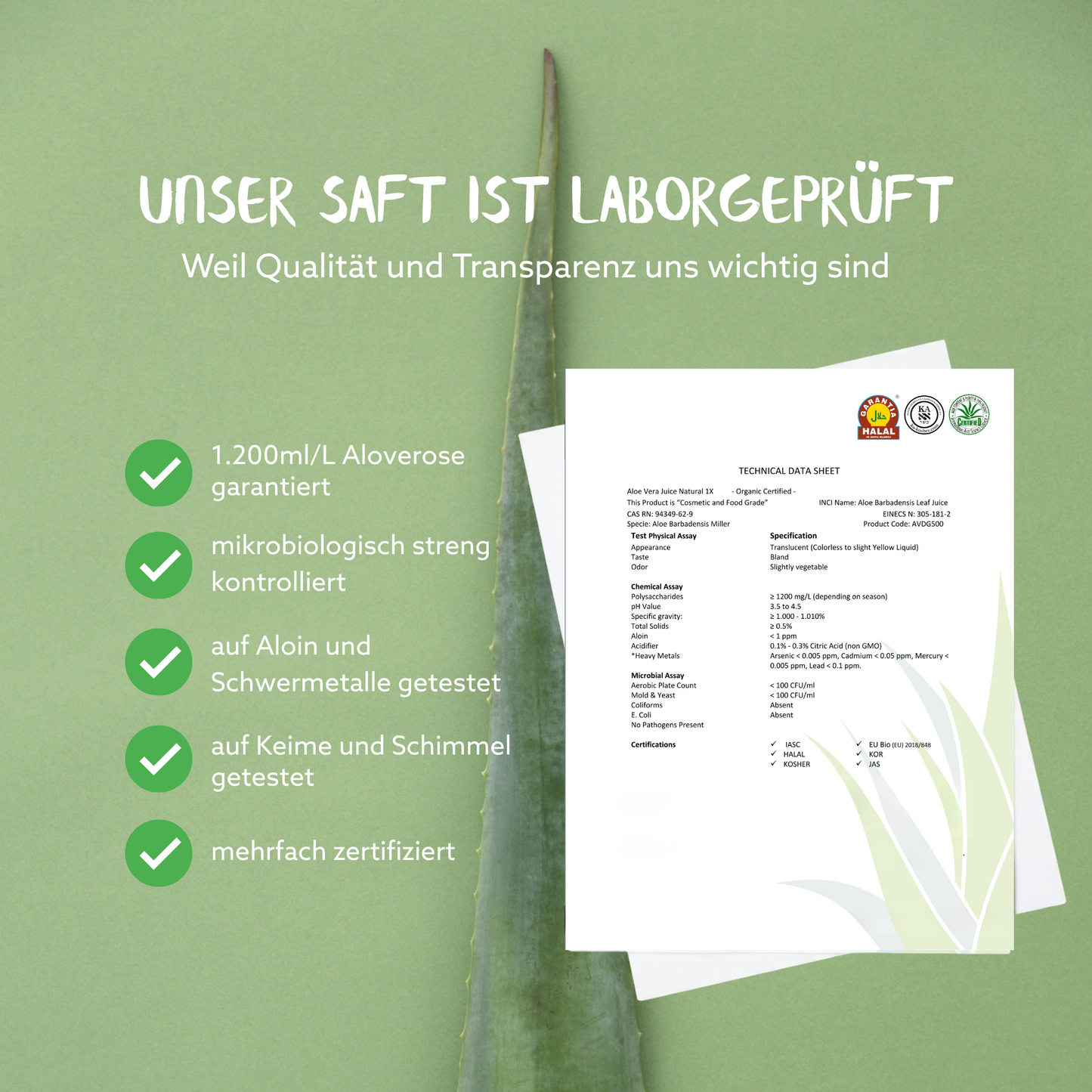
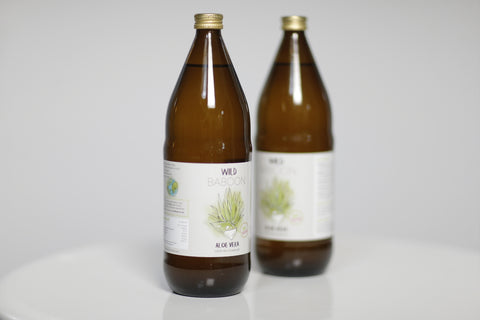
The Wild Baboon Organic Aloe Vera Direct Juice is a 100% pure juice that provides you with vitamins and nutrients. We also guarantee a high aloverose content of at least 1200-1800 mg per liter. Why is this important? Aloverose (also: acemannan) is a long-chain sugar molecule that is an essential component of aloe vera and can positively influence cellular reactions. Aloe vera also increases the bioavailability of vitamins C, E, and B12, which you can read about in this study.
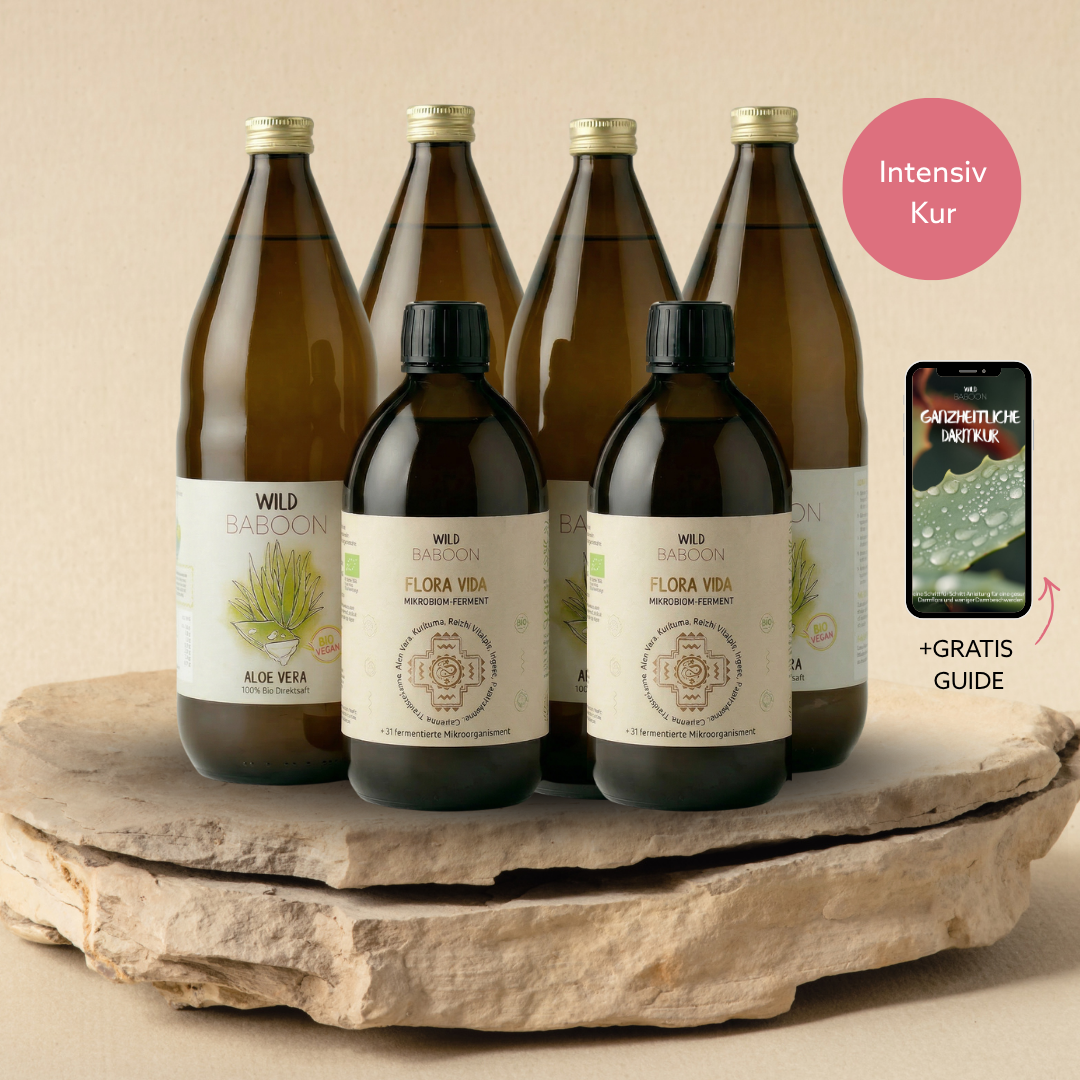
Tip: You can find all products for your natural neurodermatitis treatment in our Beauty Set. In addition to the aloe vera juice and aloe vera gel, you also receive prickly pear seed oil, as well as a FREE Ayni soap.
Our customer Jacqueline has suffered from severe neurodermatitis since childhood and, despite countless doctor's visits and creams, has not found a solution – until now. For 4 months now, she has been using a combination of internally applied aloe vera juice and aloe vera gel, which has visibly improved her skin and so far prevented new flare-ups. You can watch her full feedback here.
Treating neurodermatitis with medicinal plants and herbs
Aloe vera is not the only medicinal plant with which you can treat neurodermatitis. Especially if you want to try the natural way, medicinal plants and herbs are indispensable. We will give you an overview of which plants you can use!
Borage relieves itching
Borage (starflower) originates from the Mediterranean region and is known for its positive effects on dry and sensitive skin. A valuable oil is extracted from its seeds, which is rich in omega-3 fatty acids, has anti-inflammatory effects, and can treat itching associated with neurodermatitis. It also supports the skin barrier and promotes cell regeneration. The oil can be used both internally and externally.
Evening primrose moisturizes the skin
Evening primrose is a special medicinal plant from North America and is often used for skin problems. The oil extracted from its seeds is rich in omega-6 fatty acids, which cannot be produced by our body itself. It strengthens the skin barrier and provides moisture, which is why it is often used for neurodermatitis. You can take it in capsule form or apply it as an ointment to the affected areas, and combination ointments with evening primrose and borage are now also available.
Prickly pear seed oil
Ever heard of prickly pear seed oil? This plant-based oil is extracted from the seeds of the prickly pear. It is rich in antioxidants and vitamins E, C, and K, which support the regeneration of skin cells.
Your skin is also adequately moisturized without greasiness or leaving residues. You can find even more information and what makes our prickly pear seed oil so unique here.
Calendula supports wound healing
One of the oldest known medicinal plants is calendula, whose flowers have anti-inflammatory and wound-healing properties. Therefore, they are processed into ointments and used for chapped lips, dry skin, slow-healing wounds, burns, and neurodermatitis. In addition, cholesterol-lowering, bile flow-stimulating, and immunity-boosting properties have been proven.
Chamomile soothes inflammation
The positive properties of chamomile have also been known for centuries, and its applications are now widespread. Due to its anti-inflammatory and antibacterial properties, it is particularly used for skin problems such as acne, inflammation, neurodermatitis, and itching. It can be applied as an ointment or as a tea compress to the affected areas.

Treating neurodermatitis without cortisone: St. John's wort
St. John's wort has anti-inflammatory and antibacterial properties and is therefore used for poorly healing wounds, eczema, dermatoses, neurodermatitis, or bruises.
BUT: St. John's wort can increase the skin's photosensitivity, which is why you should avoid direct sunlight after application. In addition, allergic reactions can be triggered, and you should first discuss with a doctor whether the use of St. John's wort affects treatment with other medications.
Relaxation techniques and stress management
It is often forgotten that psychological problems such as stress, conflicts, depression, or anxiety are not only mentally burdensome but can also manifest physically. "The skin is the mirror of the soul" – because the nervous system is closely connected to our skin. How strongly neurodermatitis can also be related to stress sometimes only becomes apparent to those affected when the flare-ups subside as soon as the stressful situation ends.
Emotional stress can affect your immune system, trigger inflammatory reactions in the skin, and also worsen symptoms of neurodermatitis or trigger a new flare-up.
Therefore, it is all the more important to find the right stress management for yourself and to integrate relaxation techniques into your daily life. These include meditation, yoga, progressive muscle relaxation, and breathing exercises. But regular physical activity, exercise, and sufficient sleep can also contribute to stress management.

Home remedies for neurodermatitis + tips for everyday life
Do you want more tips on how to treat neurodermatitis? Some home remedies have proven effective and can provide symptom relief and soothe your skin. However, you should always pay attention to your skin's reaction, as each home remedy can cause individual reactions.
Oatmeal
Oatmeal contains anti-inflammatory and soothing ingredients, with the antioxidant avenanthramide being particularly important. It relieves itching in atopic dermatitis and soothes the skin.
However, other components of oats, such as fats, also provide the skin with moisture by forming a protective layer that prevents water loss.
We recommend an oatmeal bath, which you can prepare yourself from lukewarm water and fine oatmeal. Simply add a cup of oatmeal to the bathwater and bathe for 15-20 minutes.
Apple cider vinegar
Apple cider vinegar has disinfecting and anti-inflammatory properties. Dilute apple cider vinegar 1:1 with water to balance the skin's pH value and apply the mixture with a cotton pad to the affected areas. Be careful not to apply it to open wounds or severely irritated skin, as it can sting.
Black tea
Tannins in black tea have an anti-inflammatory effect and also regulate water balance. Especially during a new neurodermatitis flare-up, the tea water as a compress is very soothing on the skin and helps to treat the affected areas.
Honey
Even if you shouldn't necessarily eat honey with neurodermatitis to keep your sugar content low in your diet, it is recommended for external application. Honey has antibacterial, anti-inflammatory, and moisturizing properties that can help soothe the skin and relieve itching. Apply a thin layer of honey to the affected areas, leave it on for about 20 minutes, then rinse it off with lukewarm water.

Turmeric
The intensely colored spice not only tastes good in Asian dishes but can also help you treat neurodermatitis. The main active ingredient curcumin, in addition to its coloring property, is also anti-inflammatory, antioxidant, decongestant, and circulation-promoting. Due to these properties, turmeric is often used for various diseases and is currently being investigated for use in neurodermatitis.
Treating neurodermatitis without cortisone: Tips for everyday life
To prevent neurodermatitis from worsening, here are some simple tips for your daily life.
- Soft fabrics: Wear clothing made of cotton or other soft materials. Avoid wool and synthetic fabrics that can irritate the skin.
- Loose fit: Tight-fitting clothing can cause friction and irritate the skin. Therefore, opt for a loose fit in the affected areas.
- Sufficient sleep: Ensure good sleep hygiene and sufficient sleep to support your immune system.
- Humidity: Maintain a comfortable humidity level in your home, e.g., with humidifiers, especially in winter, and avoid areas with high humidity.
- Avoid irritants: Avoid contact with potential irritants such as rough textiles, harsh cleaning agents, and strongly fragranced care products.
- Avoid scratching: Try not to scratch, as this can further damage the skin. If it's unavoidable, keep your fingernails short or wear special gloves to minimize scratching injuries.
Our recommendation
For natural neurodermatitis treatment from the inside and out, we recommend our Beauty Set. In addition to the Aloe Vera Juice, which strengthens you from within, the Aloe Vera Gel combined with the Prickly Pear Seed Oil provides adequate moisture care for your skin, as well as skin cell regeneration and inflammation relief. You also receive our Ayni soap for FREE! With 100% natural ingredients and re-fattening organic oils, it is the perfect addition for gentle skin care.
What is neurodermatitis?
Neurodermatitis is a non-contagious, chronic skin disease, also known as atopic dermatitis, atopic eczema, or endogenous eczema. It is typically characterized by a dry, itchy rash that occurs in flare-ups.
Approximately 3.5 to 4 million people in Germany alone (Source: ndr.de) are affected. One can distinguish between three forms of neurodermatitis:
- Cradle cap: First signs in infants in the form of yellowish crusts on the cheeks and scalp.
- Flexural eczema: Redness and lichenification in the popliteal fossae, elbows, and wrists.
- Prurigo nodularis: Itchy skin nodules on the limbs, which can also appear all over the body and usually affect adults.
Causes of neurodermatitis
Atopic dermatitis can have various causes and should therefore always be clarified with a doctor. However, it is currently assumed that the skin disease results from a combination of genetic and environmental factors. The identification of the respective environmental factors is particularly important for treating neurodermatitis.
Genetic factors:
- hereditary immune system disorder
- Body overreacts to environmental substances and produces increased amounts of the antibody immunoglobulin E (IgE)
- Inflammatory reactions in the skin
- Stratum corneum of the epidermis is damaged, weakening the natural skin barrier
- Allergens, germs, or other harmful substances can penetrate the skin more easily, leading to itching
- genetic defect in the protein filaggrin (FLG) plays a role
Environmental factors:
- The human psyche (stress, conflicts, boredom)
- Environmental factors (pollen, house dust, chemicals)
- Nutrition (reactions to certain foods and pesticides)
- Climate/temperature (heat, cold, humidity)
- Clothing (too tight clothing, certain textiles)
- Animal hair (cat, guinea pig, hamster, horse)
- Water (hardness, lime content)

Once you have found your respective triggers, you should avoid them in everyday life if possible or optimize contact points to be able to treat neurodermatitis. Because each trigger can cause a new flare-up, worsen your skin, and make treatment more difficult.
Symptoms of neurodermatitis
Dry, red, itchy, and sometimes cracked skin – this is the skin condition in neurodermatitis. Depending on age, the skin disease appears on different parts of the body, and three stages are distinguished.
- Acute inflammatory stage: Skin is red, inflamed, itchy, and more and more eczema develops. This also exacerbates older skin damage.
- Subacute stage: Inflammation does not subside even after months. In addition to the same symptoms as in the first stage, skin scaling and nodule formation can also occur.
- Chronic stage: Skin becomes drier, scales, and can undergo various changes. It can keratinize and thicken, but at the same time also form deep cracks and even change skin color. In so-called depigmentation, it becomes paler; in hyperpigmentation, it becomes darker.
In addition to these main symptoms, certain accompanying symptoms can also occur. These include:
- Asthma (bronchial asthma)
- Hay fever
- House dust mite allergy
- allergic conjunctivitis (conjunctivitis)
- food intolerances
- Skin is pale (when scratching, face, mouth)
- congenital, double, usually bilateral fold under the eyes (Dennie-Morgan fold, also atopic fold or infraorbital fold)
- dry, inflamed lips (cheilitis sicca) & fissures in the corners of the mouth
- Itchy skin when sweating
- Increased inflammation (skin, nipples, ears, conjunctiva)
- Eye changes, e.g., cataracts (lens opacity) or keratoconus
FAQ – Your questions about neurodermatitis without cortisone
Which oil for neurodermatitis?
We recommend our Prickly Pear Seed Oil, as it is anti-inflammatory, protects the skin, and builds it up with antioxidants.
How can neurodermatitis be treated without cortisone?
You can treat neurodermatitis by trying to identify triggers and then avoiding them. You should also adjust your diet and skincare routine and integrate medicinal plants into your lifestyle.
We recommend our Aloe Juice at 40ml each morning and evening on an empty stomach, in addition to applying the Aloe Gel twice daily and more as needed to the affected areas. For the oily component, you can mix it with our Prickly Pear Seed Oil.
Neurodermatitis without cortisone: What helps?
Very important: Identify your triggers and avoid them. In addition, you should adjust your lifestyle, including diet and skin care, and integrate medicinal plants.
Can neurodermatitis also be treated without cortisone?
Yes, in many cases, neurodermatitis can be managed without cortisone – especially in mild to moderate cases. The goal is to reduce inflammation, strengthen the skin barrier, and avoid individual triggers. Consistent skin care, adapted diet, and stress reduction play a central role. In severe or acute flare-ups, medical clarification should be sought.
What helps with neurodermatitis instead of cortisone?
Alternatives to cortisone focus on holistic skin support. This includes moisturizing, non-irritating skincare products, an anti-inflammatory diet, stress management, and selected medicinal plants. These approaches can help relieve itching and stabilize the skin barrier. Regular application and patience are important.
What natural alternatives to cortisone are there for neurodermatitis?
Natural alternatives include Aloe Vera, evening primrose or borage oil, calendula, and chamomile. They are traditionally used to soothe irritated skin and support skin regeneration. Measures such as moisturizing care, avoiding irritants, and an anti-inflammatory lifestyle are also relevant. The effect can vary individually.
Is Aloe Vera an alternative to cortisone for neurodermatitis?
Aloe Vera can be a gentle, natural support for neurodermatitis, especially for soothing the skin and relieving itching. It does not replace cortisone in all cases but can help strengthen the skin barrier as an accompanying measure. The quality of the Aloe Vera product and regular application are crucial. Our products are natural and pure and particularly suitable for very sensitive and delicate skin.
How long does it take for neurodermatitis to improve without cortisone?
Improvement without cortisone takes time and varies individually. Initial positive effects can appear after a few weeks, especially with consistent care and trigger avoidance. Since neurodermatitis progresses in flare-ups, patience is important. A long-term routine is often more decisive than quick effects.
When is treatment without cortisone not enough?
In cases of severe inflammation, weeping eczema, or very high levels of suffering, a cortisone-containing therapy may be medically necessary. In any case, clarify this with your doctor. Even if symptoms worsen despite consistent measures, medical advice should be sought. Natural approaches can be used as a supplement in such cases. An individual assessment is important.
Can neurodermatitis remain calm permanently without cortisone?
For some sufferers, it is possible to keep neurodermatitis calm long-term without cortisone if triggers are consistently avoided. Stable skin care, an adapted diet, and stress reduction play a central role in this. Nevertheless, flare-ups can occur at any time. The goal is to reduce the frequency and intensity of flare-ups.