

From the very beginning, we at Wild Baboon have done things differently: The goal was to operate sustainably, not to exploit or pollute nature, and to treat producers and trading partners fairly and pay them adequately. A normal interaction with people and nature on an equal footing - actually completely natural.
In conventional economic cycles, renowned manufacturers from industrialized countries obtained their raw materials (e.g., coffee, cotton, bananas) in large quantities through intermediaries, making transport and trade profitable for them. The price for manufacturers, and thus also for end customers in industrialized countries, was mainly determined by these intermediaries. They added a small markup at each intermediary stage and were able to put producers, usually many small farmers with little land of their own, under price pressure.
World market prices for commodities are subject to high fluctuations, and due to a large supply in the producing countries, intermediaries could pay small farmers unreasonably low prices. In the worst case, they couldn't even cover their production costs at the end of the month, making cultivation hardly profitable for the small farmers on site and thus unfair.

What can we do for a fairer world?
The first ideas on how to make global trade fairer were developed in the USA shortly after the Second World War. In Europe, the idea of fair prices and a more social coexistence initially spread in the 1960s and 70s via the Netherlands. In Germany, it was initially Christian youth associations that dealt with the effects of globalization in working groups and demonstrated for fairer trade in protest marches.
In 1973, GLOBO was founded, and two years later, following the Dutch model, GEPA, whose fair trade products were offered in world shops and at markets. Soon after, EL PUENTE followed, and in the 80s, BanaFair and WeltPartner. To open up the conventional market, the TransFair association was founded in 1992, which awards the well-known Fairtrade seal. Other common seal organizations include the World Fair Trade Organization (WFTO), the fair-for-life program, or naturland fair.
What exactly do we mean by fair trade?
In general, fair trade refers to equitable conduct in local and international exchange of goods. Fair Trade stands for the entire fair trade movement: It represents all organizations, traders, or companies that are committed to Fair Trade, with or without seals, according to the criteria of the World Fair Trade Organization or the Fairtrade International umbrella organization. Together with the European Fair Trade Association, they established our current understanding of Fair Trade:
"Fair Trade is a trading partnership, based on dialogue, transparency and respect, that seeks greater equity in international trade. It contributes to sustainable development by offering better trading conditions to, and securing the rights of, marginalized producers and workers – especially in the South. Fair Trade Organizations (supported by consumers) are actively engaged in supporting producers, awareness raising and in campaigning for changes in the rules and practice of conventional international trade." [1]
How fair is Fair Trade?
Higher producer prices also mean higher prices for the end customer, but the surcharges do not reach the producers in full. This is due to various factors (transport, storage, traders), all of which are included in the pricing for the end customer.
Some seals also allow for a volume offset or the introduction of mixed products, which can lead to a softening of the guaranteed minimum share of fair trade products in the final product.
The certifications by the seal organizations primarily cost the local producers money before they bring them anything: Different requirements and the certification process are often very expensive and do not always immediately guarantee sales to traders or end customers.
For manufacturers, too, the initial costs for a certification, for example according to the Fairtrade standard, are very high and cannot be borne by smaller companies without large reserves.
Why we still believe in Fair Trade
We want to involve all stakeholders in the value creation and decided to follow the criteria of Fair Trade. We believed that fair remuneration for farm owners and their employees was important; local producers should be able to make a living from their work and products, enjoy a minimum of social rights, and have access to education. We rely on long-term trading relationships based on dialogue, transparency, and respect, and we ensure fair trading practices among producers, traders, and manufacturers.

The (Fair Trade) world is not perfect, and there are still things that need to be improved. High initial costs prevent small farmers in producing countries and young startups like us from getting certified. We cannot change the global economy overnight, but we also do not want to continue as before.
Therefore, we support the idea of the Fair Trade movement by setting our own standards, which are based on the principles of Fair Trade. In our Fair Trade Principles, we commit to a different way of doing business that is gentler on nature, more social for those involved, and ultimately better for all of us.
We cannot go this way alone, but we can take the first step and believe that more of you will join us to complete the journey together.
Author: Janning Karsten




2 comments
Hi liebe Marie-Luise,
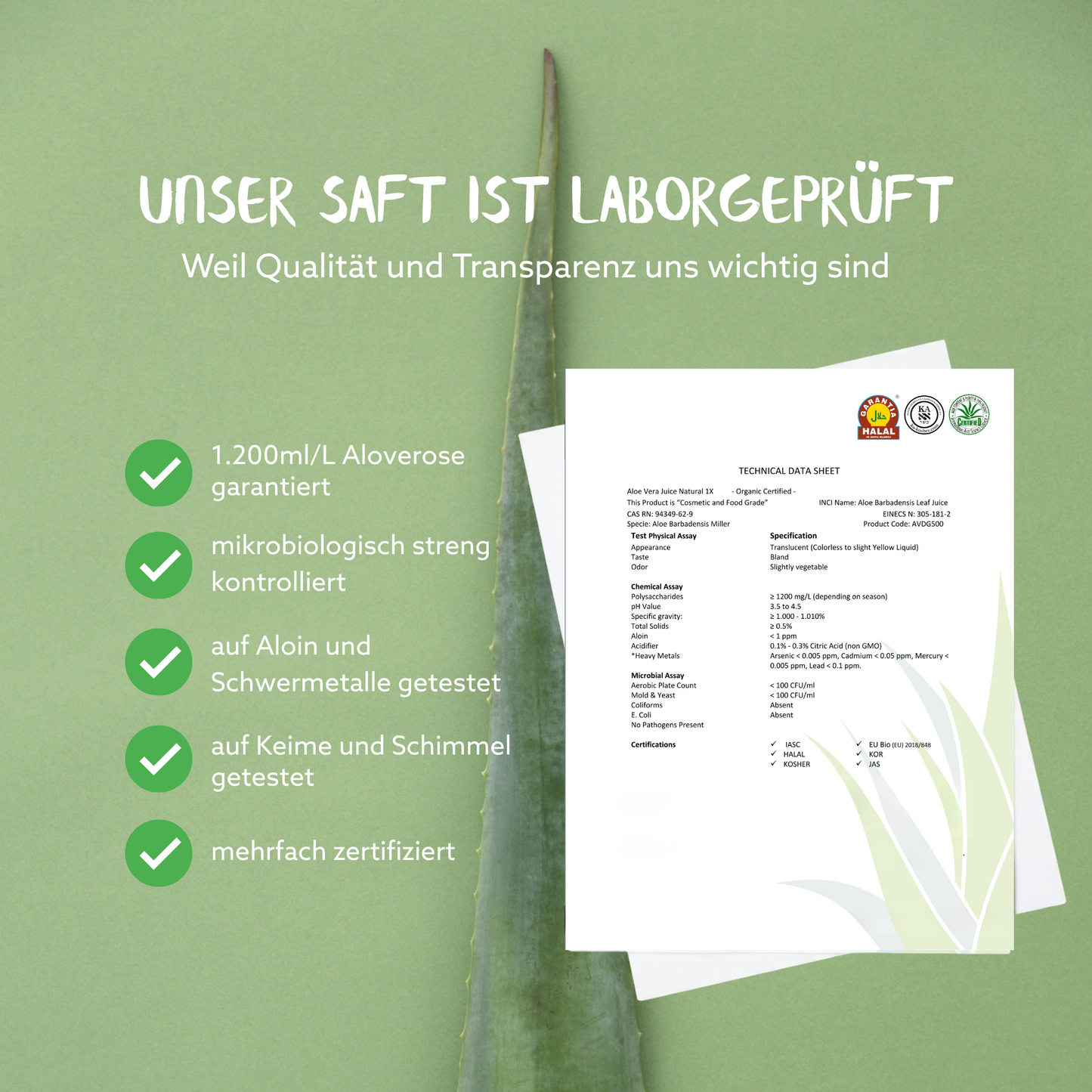
schön, dass du fragst und dich interessierst. Wir sind seit 2017 bio-zertifiziert für Deutschland und Europa nach EU-Rechtsvorschriften für den ökologischen Landbau. All unsere Produkte bestehen ebenfalls nur aus bio-zertifizierten Rohstoffen und unsere Kosmetik ist zusätzlich Naturkosmetik zertifiziert nach ICADA.
Hallo, fairer Handel ist gut, aber ihr sprecht von Biozertifizierung, dazu habe ich nichts gefunden. Durch wen bzw. nach welchem Standard sind die Produkte zertifiziert?