
What are the phases of the menstrual cycle and how can I implement a cycle-adapted lifestyle? We answer these questions in this blog post and show you how aloe vera can help alleviate pain and support your cycle in the best possible way.
1. Hormones in a circle – how the female cycle works
The female cycle begins with menstruation, the proliferation phase, which can last 3-7 days. Here, the uterine lining, which builds up during the cycle, is shed. Typically, most menstrual discomfort occurs on the second day of the period. Nausea and abdominal pain arise from the uterus contracting to shed the lining. During the period, a follicle with an egg matures in the ovary, which is then released at ovulation.
The day after the period, the follicular phase begins, in which the body prepares for a possible pregnancy.
Ovulation forms the ovulatory phase. The woman is therefore most fertile shortly before and during ovulation. The egg is fertilizable for 12-24 hours and travels from the fallopian tube to the uterus over the next three days.
Around the 18th day of the cycle, the luteal phase begins. In this phase, the female body forms a corpus luteum, which causes body temperature to rise by at least 0.3 degrees Celsius. Meanwhile, the uterine lining thickens as it prepares for a possible implantation of a fertilized egg. If fertilization does not occur, the corpus luteum dies off in the next 10 days, and a new menstrual period begins.
2. Cycle-adapted nutrition
During the menstrual phase, the body loses a lot of iron due to blood loss, which can be replenished with red fruits and vegetables. Furthermore, healthy fats, such as avocado and olive oil, are important. Vitamin A helps the liver balance hormones and can be found in root vegetables like pumpkin, carrots, and sweet potatoes.
In the follicular phase, the hormone balance changes again, and estrogen levels rise. To support the body here, probiotic foods are beneficial. Fermented foods such as sauerkraut, kefir, kombucha, and pickles are included, but sprouts and tempeh also help the body with hormone processing.
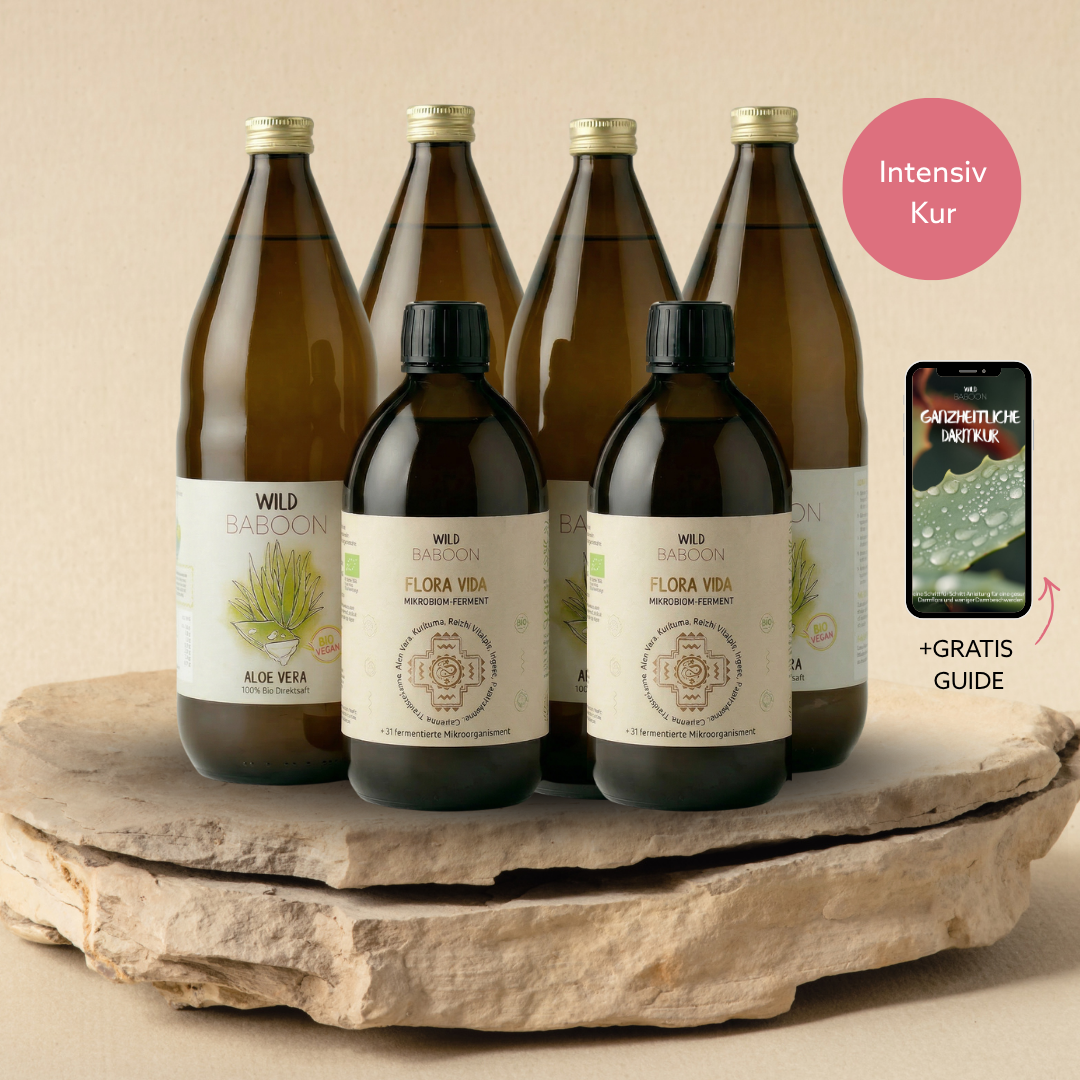
Our recommendation: FLORA VIDA - a fermented microorganism complex with 31 different bacterial strains. All ingredients, including ginger, turmeric, Reishi mushroom, and aloe vera, have been multi-stage fermented, thus offering increased bioactivity.
In the third phase of the cycle, the ovulatory phase, fiber and calcium are key to a strengthened body. Due to the estrogen increase, more progesterone is also produced, which is why antioxidants are needed. You can find these in colorful vegetables and fruits and in calcium-rich vegetables such as cauliflower, fennel, broccoli, and arugula, and of course in aloe vera.
At Wild Baboon, we generally advise a vegan diet, but especially from ovulation onwards, you should avoid meat and dairy products. Animal products contain arachidonic acid, which promotes pain and inflammation in the body.

3. Diet one week before your period
In the last phase of the cycle, the body produces a lot of progesterone, as it prepares for a possible implantation of the cell. However, if the corpus luteum and the egg are shed, hormone levels drop enormously, which can lead to typical mood swings.
To best support your body here, we recommend an alkaline diet with a daily shot of 40ml Aloe Vera juice in the morning and evening. The plant's juice has a positive effect on your acid-base balance.
What does it include?
Vegetables, salads, sprouts, natural oils, nuts, and fruits: they are all rich in micronutrients that greatly help your body relieve pain. In addition to micronutrients, aloe vera also contains many phytonutrients that serve as anti-inflammatory agents for your body.
Did you know that some spices can have an antispasmodic effect? Anise, fennel, cardamom, vanilla, coriander, and cinnamon are best suited for this and not only give your dishes a boost but also your health!
Anyone suffering from severe PMS symptoms, such as migraines or cramps, should pay particular attention to their diet one week before their period. A magnesium-rich diet is especially important, which nuts (cashews, almonds, hazelnuts), legumes, sunflower seeds, and whole-grain foods support. Vitamin B can be found in legumes, oatmeal, green vegetables, and quinoa and ensures an improved mood.
Ever heard the saying: "Eat your Greens!"? Green vegetables contain an incredible number of good things for your body, but especially many antioxidants and chlorophyll. These two substances cleanse your blood and promote blood formation in your body, a very important process when you lose blood. Green vegetables are also very varied, including kale, chard, sprouts, nettles, herbs, salads, spinach, and wild vegetables.
You can also easily enjoy green leafy vegetables in a delicious green smoothie. Here you will find 5 delicious recipes.

Overall, high-quality oils, such as linseed oil and hemp oil, always help you because they contain alpha-linolenic acid. This acid, paired with the contained omega-3 fatty acids, alleviates your menstrual pain.
Furthermore, adequate fluid intake is very important, even if the period initially appears stronger, the lining can be shed more quickly and easily. Therefore, avoid table salt, alcohol, and caffeine, as these can dehydrate your body and worsen cramps. In addition, the body stores a lot of water during this time due to the estrogen increase, which is why you should drink even more – counterintuitive, but it works.
Many women suffer from a magnesium deficiency, which often exacerbates period symptoms. Cramps, in particular, are triggered by this magnesium deficiency. But where does this mineral deficiency come from? Humanity has been over-acidified for many decades, as most foods, but also the entire lifestyle, are dominated by acids. An over-acidification of the body often results from an unhealthy diet combined with stress, nicotine, alcohol, sugar, and caffeine. Even in many situations that seem insignificant to us, we absorb acids, such as when showering. If you are interested in the difference between acidic, pH-neutral, and alkaline skincare, take a look at this blog article.
To support your body holistically and increase the bioavailability of vitamins, we recommend the Organic Aloe Vera Direct Juice from Wild Baboon.

4. How does Aloe Vera work?
Aloe Vera is called "Ghrita – Kumari" in Ayurvedic medicine, which means "young girl" or "virgin." It bears this name due to its alleged regenerative properties. In classical Ayurvedic texts, this plant is repeatedly mentioned for the treatment of gynecological imbalances. Aloe Vera has a cooling and cleansing effect on the body's urinary, blood, and plasma systems.
Aloe Vera contains over 200 ingredients that support your body as a whole. It contains
- Vitamins: A, B, C, and E
- Minerals: such as calcium, iron, phosphorus, magnesium, copper, selenium, and zinc
- Amino acids: a total of 7 of 8 essential amino acids and 11 of 14 non-essential amino acids
- Polysaccharides: especially acemannan, also called aloverose
- Monosaccharides
- Anthraquinones: 12 of which have antimycotic and anti-cancer properties
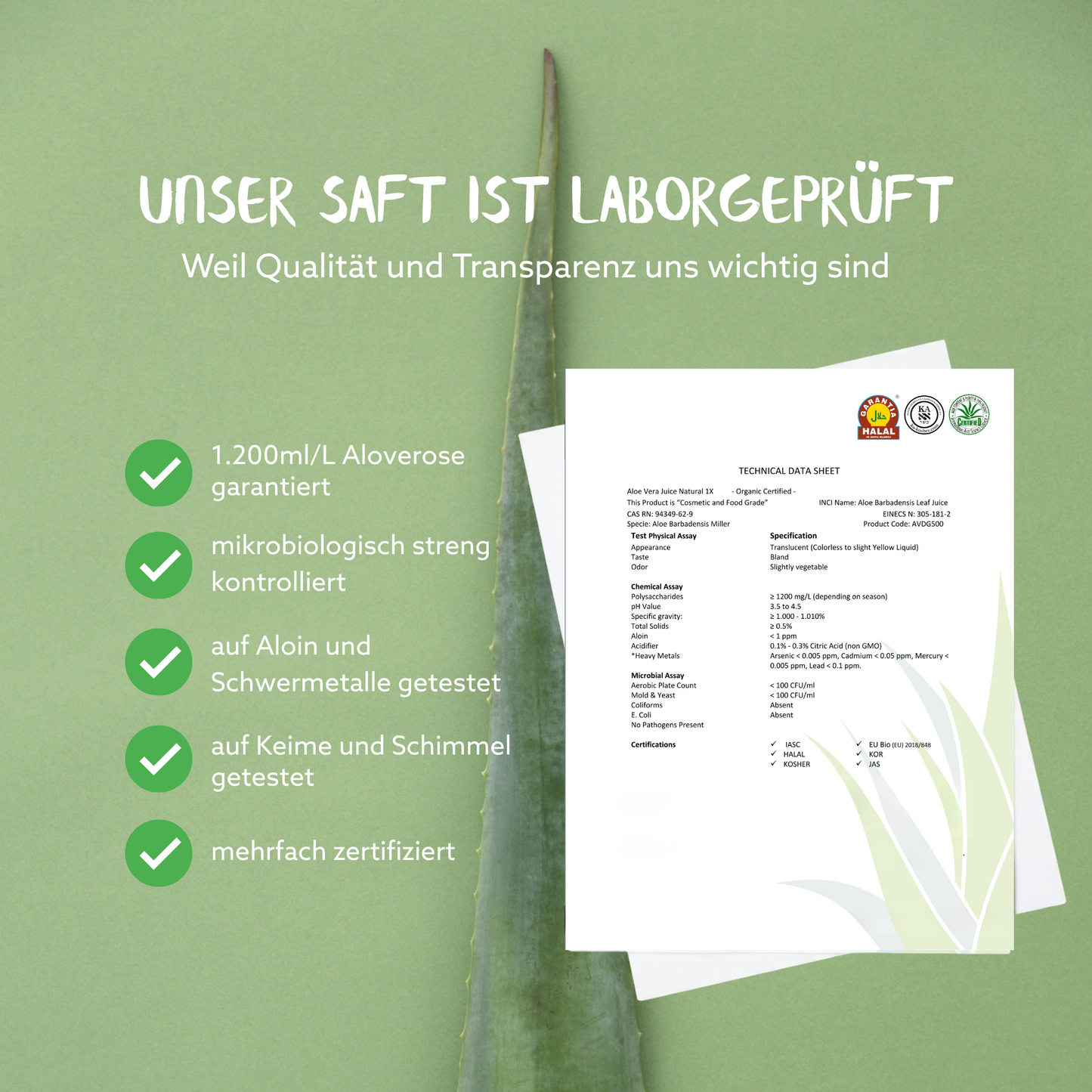
The aloverose, in combination with the other ingredients, makes up the plant. Aloverose has been researched for many years. It promotes wound healing of the skin by simultaneously activating healthy cell growth and division. Furthermore, studies have already demonstrated the prebiotic abilities of aloverose. Prebiotics, as mentioned above, work in the gut and promote a healthy gut flora by eliminating pathogens and serving as food for good gut bacteria. If you are interested in the effect of aloe vera in the gut, we have an exciting article for you here.
5. Aloe Vera during menstruation
Aloe Vera can have many positive effects on the (female) body. Traditionally, the plant is used against irregular menstruation and menstrual pain. Typical symptoms can also be:
- Irregular cycles
- Pain and cramps during menstruation
- Mood swings
- Headaches
- Skin problems
- Menorrhagia
- Desire to conceive, pregnancy, and childbirth
- Endometriosis or similar conditions
- With long-term use of the pill or similar hormonal contraceptives

In addition to the important aloverose, aloe vera contains two substances, anthrone and C-glycoside. These are considered to promote menstruation. Hormones are brought into balance and can help you maintain a regular cycle. They also help the uterine lining detach during prolonged periods. Furthermore, aloe vera helps relieve a feeling of fullness, fluid retention in the connective tissue, and fatigue, as it supports long-term gut health and provides your body with important minerals.
The Organic Aloe Vera Direct Juice from Wild Baboon is a pure natural product. Listen to your body and give it time to readjust and rebalance processes within you.