
Pimples, blackheads, impure skin - acne
But how do acne and pimples actually develop? How can this skin condition be cured? And how can aloe vera be used against pimples?
Contents
1. Comedones - the foundation of all pimples
2. Causes of acne
3. Accompanying symptoms of acne
4. Long-term consequences of acne
5. Treatment methods: Aloe vera for acne?
6. How can acne be reduced?
7. Aloe vera against pimples
8. Your daily routine with aloe vera for acne
9. Studies: Aloe vera against pimples
10. Summary: Aloe vera against pimples
11. FAQ - Your questions
Comedones - the foundation of all pimples
 Comedones (= blackheads) are known to most of us as black, clogged sebaceous glands in the T-zone. They are the basic building blocks of the skin disease acne and develop when the sebaceous gland duct becomes clogged due to extreme keratinization. This completely blocks the duct. The keratin itself contains the pigment melanin, which oxidizes with oxygen on the skin's surface and subsequently darkens.
However, if the blackheads do not reach the skin's surface, they tend to become inflamed. These closed comedones develop into purulent pustules, commonly known as pimples. Overall, comedones and pustules can occur in combination skin, as well as in dry or mature skin, if it is out of balance.
Causes of acne
Acne is a common skin problem triggered by various causes and is often a combination of several factors. Especially during puberty, when the body undergoes hormonal changes, pimples and impurities often appear. But even in adulthood, acne can be caused by stress, an unhealthy diet, improper skincare, and harmful lifestyle habits such as smoking and alcohol. Furthermore, acne can be genetically predisposed or occur as a side effect of certain medications.
Accompanying symptoms of acne

Acne is a serious skin condition that can be treated effectively in its early stages.
If it is diagnosed too late, pustules can develop into nodules in deep skin layers, which can lead to pressure sensitivity or even pressure pain. These deep inflammations cause swelling, which can lead to headaches. If your neck area is affected, your lymph nodes may also swell.
If you open infected pimples with unclean hands, smear infections occur, which is promoted by itching. In principle, such deep-seated inflammatory processes in the body can also lead to fever, and in the worst case, to poisoning and sepsis (blood poisoning).
However, those affected often suffer not only from the physical characteristics of the skin disease. They report frequently having to deal with exclusion in their social environment and bullying. In addition, acne and pimples erode our self-confidence. Depression and other psychological illnesses can be the result, which in turn can worsen the acne.
Long-term consequences of acne
The long-term consequences of acne are mainly characterized by scarring. Especially when those affected squeeze pimples and blackheads themselves, unintentional inflammations often occur, which can lead to scar tissue. Severe forms of acne further promote this scarring, as the connective tissue is so severely damaged that the skin can no longer regenerate completely. Instead, it is replaced by scar tissue, which initially turns red and later whitish.
These scars may fade or disappear on their own over time. However, in cases of severe scarring, professional treatments are often necessary to remove or reduce the scars in the skin's appearance. These include acid treatments, injections of collagen or cortisone, surgical scar corrections, cold treatments, dermabrasion, or laser treatments.
💡Tip: To prevent scarring and remove pimple scars, the Aloe Vera plant can be a valuable support. When Aloe Vera gel is applied to pimples, it has an anti-inflammatory effect and promotes skin healing. The question "Does Aloe Vera help against pimples?" can therefore be clearly answered with "Yes," because it calms the skin, reduces inflammation, and prevents scar tissue from forming.
Regular use of aloe vera for acne can make the skin smoother and more resilient, significantly reducing the risk of scarring. In addition to its direct effect against acne, aloe vera also supports long-term skin health by helping to mitigate existing pimple scars. These natural properties make aloe vera an ideal supplement for the treatment and prevention of acne and its consequences.
Treatment methods: Aloe vera for acne?

Acne should be recognized and treated as early as possible. Therefore, a visit to the dermatologist is essential. They should determine the stage and severity of the acne through swabs and tests to initiate the correct treatment steps.
In mild cases, a change in skincare products is recommended; in severe cases, antibiotics, hormones, or salicylic acid are often used.
But there are also other, long-term methods completely without chemicals that help the skin to regenerate and relax. A natural method for treating acne is the application of aloe vera.
But does aloe vera really help against pimples? The aloe vera plant contains anti-inflammatory and antibacterial properties that can help alleviate acne. With regular application of aloe vera gel to pimples, the skin can be calmed and cleansed. Studies also show that aloe vera provides effective support for acne by moisturizing the skin and promoting healing.
Is the aloe vera plant a miracle weapon against pimples? Many people report impressive "Aloe Vera Acne before and after" results. Aloe vera is applied directly to the pimples to reduce inflammation and clear the skin. Regular use of aloe vera against acne can visibly improve the skin and reduce the appearance of new blemishes.
You suffer not only from acne but also neurodermatitis? In our article, you will find natural approaches on how to treat neurodermatitis without cortisone!
How can acne be reduced?
🍭 First and foremost, a look should be taken at your diet. Refined sugar can often be a trigger for acne. Foods with a high glycemic index, i.e., those that quickly raise blood sugar, can worsen the skin's appearance.
💄 Do you like to wear makeup? Unfortunately, makeup prevents your skin from "breathing" and clogs pores. With acne, it should be avoided as much as possible. BUT, if you feel more comfortable with it and can't do without it, then pay attention to the choice of products, clean brushes, and gentle, thorough makeup removal!
🧴 Excessive skin cleansing should also be avoided, as this can lead to skin irritation. The skin's surface needs several hours to return its pH value to its original state after cleansing. If you want to learn more about proper skin cleansing, we have an interesting blog post for you here.
☀️ Direct sunlight can dry out the skin, which is why sunscreen should be applied or, alternatively, direct sunlight should be reduced to a few minutes per day.
🍸 Make sure to avoid nicotine and alcohol, get plenty of sleep, and drink at least 2 liters of water a day. Peeling or harsh brushes are a no-go for acne, as they further irritate already inflamed skin.
Aloe Vera against pimples
The Aloe Vera plant is the ideal complement for a conscious and healthy lifestyle. While you can apply pure Aloe Vera Gel topically, you should also take 40ml of Aloe Vera Direct Juice in the morning and evening. The ingredients of Aloe Vera are prebiotic. Prebiotics promote a healthy gut flora, which in turn helps support hormonal balance.

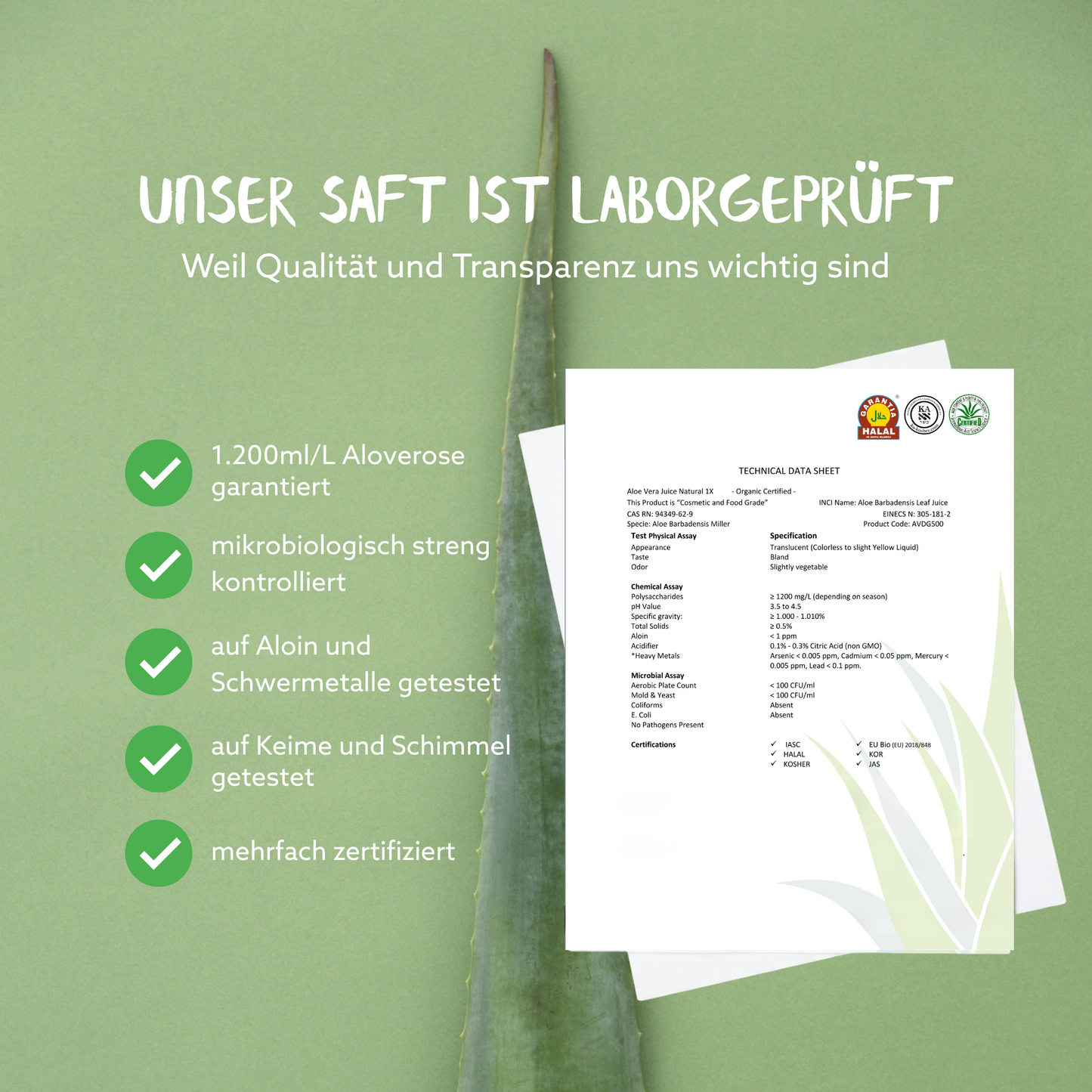
The special ingredient Aloverose is a
The Wild Baboon Aloe Vera Gel absorbs quickly into the skin and alleviates skin dryness with its hydrating effect. Aloe vera also has an antiseptic effect, killing bacteria responsible for impurities. The formation of collagen and elastin in the skin is stimulated, which can reduce acne scars, fade over time, and make the skin look brighter and firmer.
Many know the aloe vera plant as an after-sun lotion. In this context, it has been scientifically discovered that aloe vera relieves burns faster and more effectively than cortisone. The salicylic acid contained in the medicinal plant is often prescribed individually by dermatologists, but without the aloverose and vitamins of the plant, it provides little moisture and nutrients. Salicylic acid has a keratolytic effect, thus freeing the pores and relieving pain and itching.
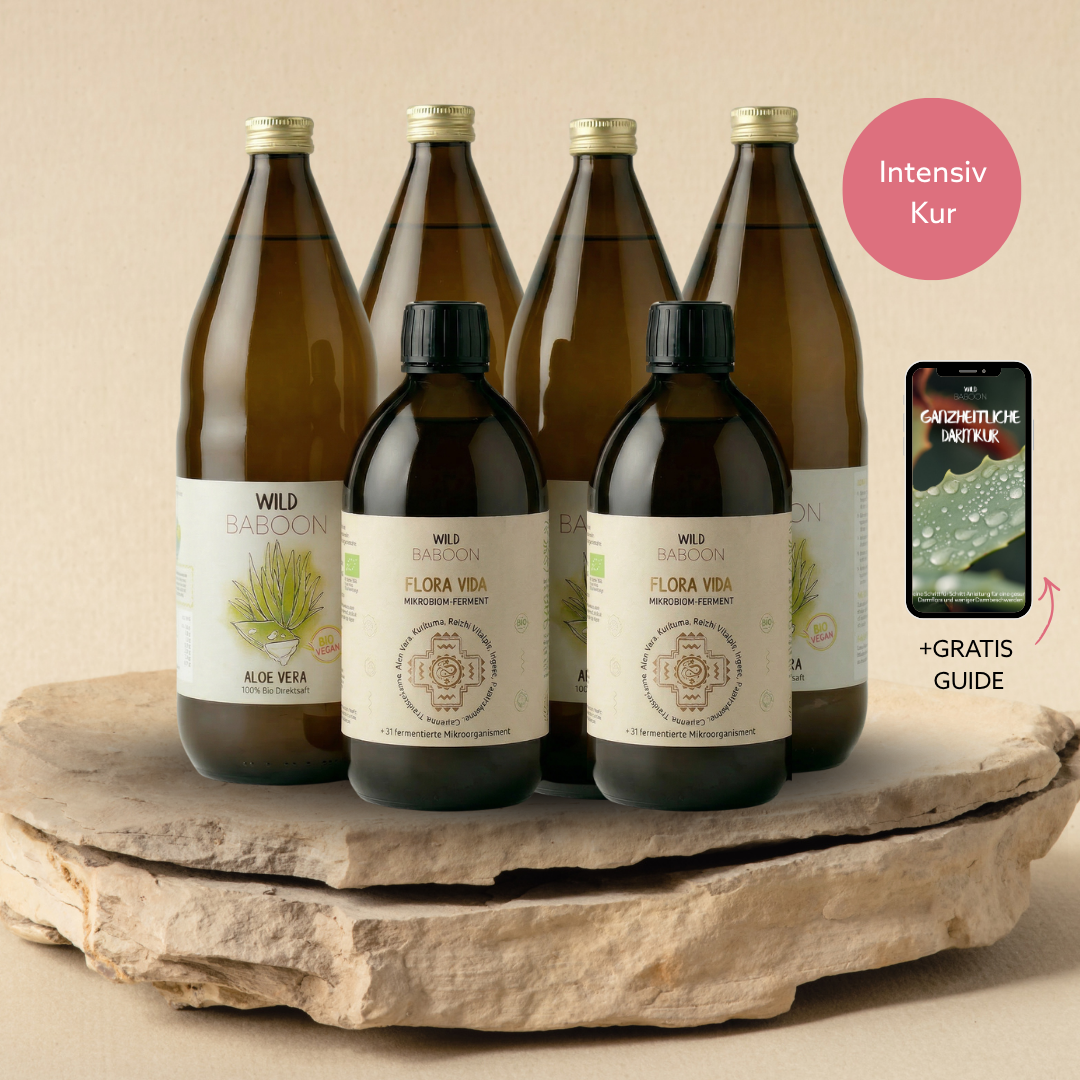
💡 We recommend taking the juice for at least two months for acute skin problems. This corresponds to about 6 bottles of Wild Baboon Organic Aloe Vera Direct Juice.
Your daily routine with Aloe Vera for acne
Morning:
- wash your face with lukewarm water and our Ayni soap based on aloe vera
- avoid makeup
- apply the Wild Baboon Aloe Vera Gel to the affected areas. It has an anti-bacterial and anti-inflammatory effect, and at the same time cools and soothes
- add 2-3 drops of our high-quality Organic Prickly Pear Seed Oil to the gel and distribute it on your face and décolleté. Due to its comedogenic value of 0, prickly pear seed oil does not clog our pores and is therefore a natural care for acne, pimples, and impurities
- drink 40ml Wild Baboon Aloe Vera Direct Juice for the internal treatment of the cause of acne
Evening:

- cleanse your face with a little foam from the Wild Baboon Aloe Vera Ayni Natural Soap
- then apply the Aloe Vera Gel to acne and the entire face and décolleté area. Here too, add 2-3 drops of prickly pear seed oil to the gel as needed and massage in
- intake of 40ml Wild Baboon Aloe Vera Direct Juice
In our BEAUTY SET, we have put together all the important products you need for your aloe vera routine for acne and pimples. You even get the Ayni facial soap, worth €11.90, FREE from us! 😍
2) Study: Treatment of acne and skin inflammation
Due to its anti-inflammatory properties, aloe vera gel can help reduce acne and other skin inflammations (Hekmatpou et al., 2019).
Summary: Aloe Vera for Pimples
The Aloe Vera plant is a unique plant that has been known for centuries for its many special properties. It is characterized by the following ingredients:
- Vitamins A, C, E, and B
- Minerals and trace elements (calcium, magnesium, zinc, chromium, potassium, sodium, and copper)
- approx. 20 amino acids (7 of which are essential)
- Enzymes
- Polysaccharides (acemannan/aloverose, glucomannan, and mannose)
- Anthraquinones
- Salicylic acid
- Lignins
- Saponins
- Secondary plant compounds
These ingredients make Aloe Vera anti-inflammatory, antibacterial, and skin-regenerating, which means Aloe Vera can be used excellently against pimples.
In addition to these properties, salicylic acid is known for its ability to penetrate deep into the pores to remove sebum and dead skin cells. This prevents pores from becoming clogged and no new pimples can form. It also relieves pain and itching.
Together with the polysaccharide aloverose or acemannan and the vitamins of the plant, Aloe Vera gel provides moisture and nutrients. This strengthens the skin barrier, hydrates it, and supports regeneration, which reduces acne scars.
Are you already using Aloe Vera for pimples?
FAQ - Your Questions
How quickly does Aloe Vera gel work against pimples?
Normally, visible improvements can be seen after 2 weeks, especially when Aloe Vera is applied externally and internally.
How does Aloe Vera help against pimples?
Is Aloe Vera gel good for acne?
Can you make Aloe Vera gel yourself for pimples?
Theoretically, you can make Aloe Vera gel yourself by simply placing the fillet of the Aloe Vera plant in water to remove the substance aloin and then blending it into a gel. BUT, an Aloe Vera plant from Germany will never have the same nutrient density as a plant grown in its preferred conditions. The Aloe Vera plant is a desert plant and needs a lot of sun.
What is the cause of pimples?
Pimples occur when comedones or blackheads, which are nothing more than clogged sebaceous glands, become inflamed.