
Are you thinking about stopping the pill and unsure what you should consider? While the birth control pill is one of the most popular and safest contraceptive methods on the market, more and more women no longer want to take it for various reasons. However, the threshold to actually take this step is very high, as many women are afraid of the consequences of hormonal changes.
In this blog post, you will learn how you can best support your body in hormone regulation and what steps you should follow to stop taking the pill correctly.
Contents
- At a glance: Step-by-step guide to stopping the pill
-
Preparation for stopping the pill
- Desire to conceive or alternative contraceptives?
- Choosing the right time
- Stopping the pill: Here's how
- How to stop the pill correctly?
- What happens in the body after stopping the pill?
- Cycle after stopping the pill
- Stopping the pill: How to support your body
- Ensure sufficient sleep and stress reduction
- Integrate exercise and sports into your daily routine
- Opt for a healthy diet
- Support your organs: Liver, adrenal glands & intestines
- Integrate medicinal plants into your diet
- Why stop the pill?
- FAQs - Frequently asked questions about stopping the pill
At a glance: Step-by-step guide to stopping the pill
- Consider alternative contraceptives (if needed)
- Determine a suitable time to stop the pill
- Consider holidays/vacation times
- Consider your own vacation plans
- Be confident in your decision
- Plan enough time if you wish to conceive
- Start your 6-week Aloe Vera juice cleanse a few weeks in advance
- If you need to significantly change your diet, it's best to start several weeks in advance
- Balanced diet
- Integrate foods known to support hormone regulation
- Pay attention to your vitamin and nutrient intake and order supplements if needed
- Drink enough water
- Avoid alcohol and sugar
- Stop the pill at the end of the blister pack
- Change your contraception method (if needed)
- Support your organs
- Liver
- Adrenal glands
- Intestines
- If necessary, do a detox or fasting cure, but make sure to choose a mild form like alkaline fasting
- Integrate additional medicinal plants into your daily routine/diet
- Reduce stress, pay attention to stress management and sufficient sleep
- Ensure regular exercise
- Give yourself peace and time!
- If you experience unusual symptoms or side effects such as a missed period lasting longer than 3-6 months, consult your gynecologist
Preparation for stopping the pill
Desire to conceive or alternative contraceptives?
Before stopping the pill, you should consider how you want to alternatively contracept if you do not wish to conceive. As an alternative to the pill, you might be looking for hormone-free contraception. These include the following methods: natural contraception, copper IUD/coil, (female) condoms, sterilization, diaphragm, and cervical cap.
Then you should make an appointment with a gynecologist to clarify all open questions and discuss your new contraceptive method. For many doctors, a special consultation to explain the respective contraceptive method is mandatory.

Choosing the right time
Depending on why you want to stop the pill, you should consider a few points when choosing the right time. It is important to know that your body will initially experience a hormonal imbalance, which can have some side effects, which we will explain in more detail in the next point.
In the first few weeks after discontinuation, a withdrawal bleed should occur, as usual during the one-week break during pill intake. It can take several weeks or months for your hormone balance to stabilize and for you to have a regular natural cycle again.
However, this does not mean that you cannot get pregnant right away. For 9 out of 10 women, a natural monthly period occurs 6 weeks after stopping the pill, and for 50% of women who wish to conceive, pregnancy occurs within the first 6 months.
If your period does not return for several months, it is called post-pill amenorrhea. Especially if you want to get pregnant, this is suboptimal and you should have it checked by a doctor as early as possible.
So, if you want to conceive, you should definitely plan enough time!
Further tips:
- Consider your gynecologist's holidays/vacation times if you want to switch to a new contraceptive quickly
- Consider your own vacation plans: For example, if you want to switch to an IUD, you are not allowed to swim or bathe for up to 20 days after insertion. If your beach vacation falls exactly within this period, that's a shame, of course.
- Do not stop the pill for shorter periods, as the risk of thrombosis is further increased if you start again after a few months

Stopping the pill: Here's how
How to stop the pill correctly?
Once you have decided on an alternative contraceptive method (if you don't want to conceive) and chosen a suitable time, you can start. It is important to take the pill until the end of the blister pack – with the exception of the mini-pill, which can be stopped at any time. This prevents unexpected bleeding. Then you should give yourself peace and time for your body to readjust.
What happens in the body after stopping the pill?
Initially, a withdrawal bleed usually occurs – as during the one-week break between two blister packs. If you want to switch to an IUD, for example, this is a good time, as it can only be inserted during bleeding, and you thus avoid potentially waiting months for your next period.
Your hormone levels were artificially influenced while taking the pill and now have to manage on their own from one day to the next. This leads to a hormonal imbalance in your body, which can be accompanied by various side effects, affecting about half of women.
Side effects or accompanying symptoms include:
- Cycle problems (irregular or prolonged absence of periods)
- Breakthrough bleeding
- Skin problems and acne
- Hair loss
- Weight fluctuations (reduction of water retention and possibly weight loss)
- Mood swings and irritability
- Increased libido (= sexual desire; due to an increase in testosterone levels)
- Post-pill amenorrhea
- Post-Pill Syndrome (PPS)
These side effects are usually only temporary until the hormone balance has regulated itself again. Consult your gynecologist if these side effects last longer than 3-6 months.
Cycle after stopping the pill
As already mentioned, your hormone balance is disrupted by the pill, and it takes some time until it finds a natural cycle again without the addition of artificial hormones.
It can take several weeks or months for your hormone balance to stabilize and for you to have a regular natural cycle again.
Stopping the pill: How to support your body
Many women who would like to use hormone-free contraception are afraid of stopping the pill. This is mainly due to the physical adjustment and the associated side effects. Depending on the woman, it can take different lengths of time for the hormone balance to regulate itself, and some women hardly notice any negative accompanying symptoms.
If you want to prepare optimally and support your body when stopping the pill and during the hormonal change, then we have some tips for you!
Ensure sufficient sleep and stress reduction
Sufficient sleep (at least 7-8 hours) is essential to regulate your hormone balance and give your body enough rest to recharge its batteries. You should also integrate special relaxation techniques and stress management into your daily routine to support your body's recovery. These include meditation, light exercises like yoga, mindfulness and breathing exercises, and massages.

ℹ️ INFO: Did you know that stress affects your hormonal system and thus also hormone regulation? In stressful situations, especially the stress hormones cortisol and adrenaline are released. Cortisol increases blood sugar levels, suppresses the immune system, and helps the body respond to stress, while adrenaline is released by the adrenal glands and provides an energy boost. Prolonged stress can unbalance your hormonal system, which is why stress management is very important, especially after stopping the pill!
Did you also know that you can lower your cortisol and adrenaline levels by reducing your caffeine consumption?
Integrate exercise and sports into your daily routine
Exercise can also help you with stress management, keep you fit at the same time, and support hormone regulation. Outdoor sports like jogging, cycling, or swimming promote your circulation and can reduce the release of stress hormones. In addition, the release of feel-good hormones like endorphins, serotonin, and dopamine is stimulated, and your sleep quality is improved.
But sport has much more influence on your hormone balance: Metabolic hormones are also regulated, and sex hormones are influenced.
For example, testosterone levels can be increased through regular strength training, which among other things supports libido. In women, regular exercise can help regulate the menstrual cycle and alleviate symptoms of premenstrual syndrome (PMS).
Opt for a healthy diet
As in so many cases, a healthy diet is also the be-all and end-all! Pay attention to a nutrient-rich and balanced diet to give your body the nutrients it needs to regulate its hormone balance itself. The following foods support your body in this and should be integrated into your diet:
- Flaxseed: Flaxseed contains lignans with both estrogenic and anti-estrogenic ingredients that help regulate hormones and protect against diseases caused by hormonal imbalances.
- Fiber-rich foods: They promote bowel movements and thus also help to excrete excess hormones.
- Pomegranate: Pomegranates contain many antioxidants and substances that behave very similarly to the natural estrogen of women in the body. They also have anti-inflammatory properties and are said to relieve mood swings during menstruation.
- Cruciferous vegetables: These vegetables (Brussels sprouts, broccoli, cabbage, cauliflower, bok choy, and kale) contain indol-3-carbinol, which helps the body excrete excess estrogen.

In addition, vitamins and minerals are crucial for many biochemical processes, including hormone production and regulation. You should pay attention to the following nutrients and can take them either through food or as supplements:
- Zinc: Important for the production of hormones such as testosterone. Sources: Nuts, seeds, meat, seafood
- Magnesium: Supports the function of the adrenal glands and the production of steroid hormones. Sources: Leafy greens, nuts, seeds, whole grains.
- B vitamins: Particularly important for stress management and supporting the adrenal glands. Sources: Meat, fish, eggs, dairy products, green leafy vegetables.
- Vitamin D: Supports hormone production and the immune system. Sources: Sun exposure, fatty fish, eggs, fortified foods.

Support your organs: Liver, adrenal glands & intestines
Your organs and hormones are closely connected, as many organs function as endocrine glands that produce hormones and release them into the bloodstream. The function and health of these organs are therefore extremely important for a stable hormone balance and hormone regulation.
Basically, you support all organs by avoiding alcohol, sugar, and animal products as much as possible, as they burden the organs.
Liver: Support hormone breakdown
Your liver is responsible for breaking down hormones so that excess or used hormones do not negatively affect the body. These include sex hormones but also, for example, insulin, which helps regulate your blood sugar level. After stopping the pill, the liver must help break down remaining artificial hormones and remove them from the body.
You can support your liver through certain foods such as
- Artichokes
- Salsify
- Broccoli
- Brussels sprouts
- Kale
- unsaturated fatty acids in vegetable oils and nuts
- bitter substances like dandelion and nettle (you can also find these bitter substances combined in our Green & Clean Tea)

Additionally, sufficient fluid intake is important to support the liver in detoxification. Aim for at least 8 glasses of water per day.
🤫 TIP: A liver compress before bedtime can support detoxification processes while promoting your sleep quality. To do this, take a linen or cotton cloth and soak it in hot water. Then place it on the liver area and stabilize it with a dry cloth. Leave the liver compress there for 20-30 minutes before bedtime.
Adrenal Glands: Avoid stress from cortisol
The adrenal glands are small, but very important endocrine glands located on top of each kidney. They play a central role in the body's hormone system and are involved in the production and release of various hormones. Among other things, they produce the stress hormone cortisol, which can be increasingly released due to hormonal changes, potentially stressing the adrenal glands.
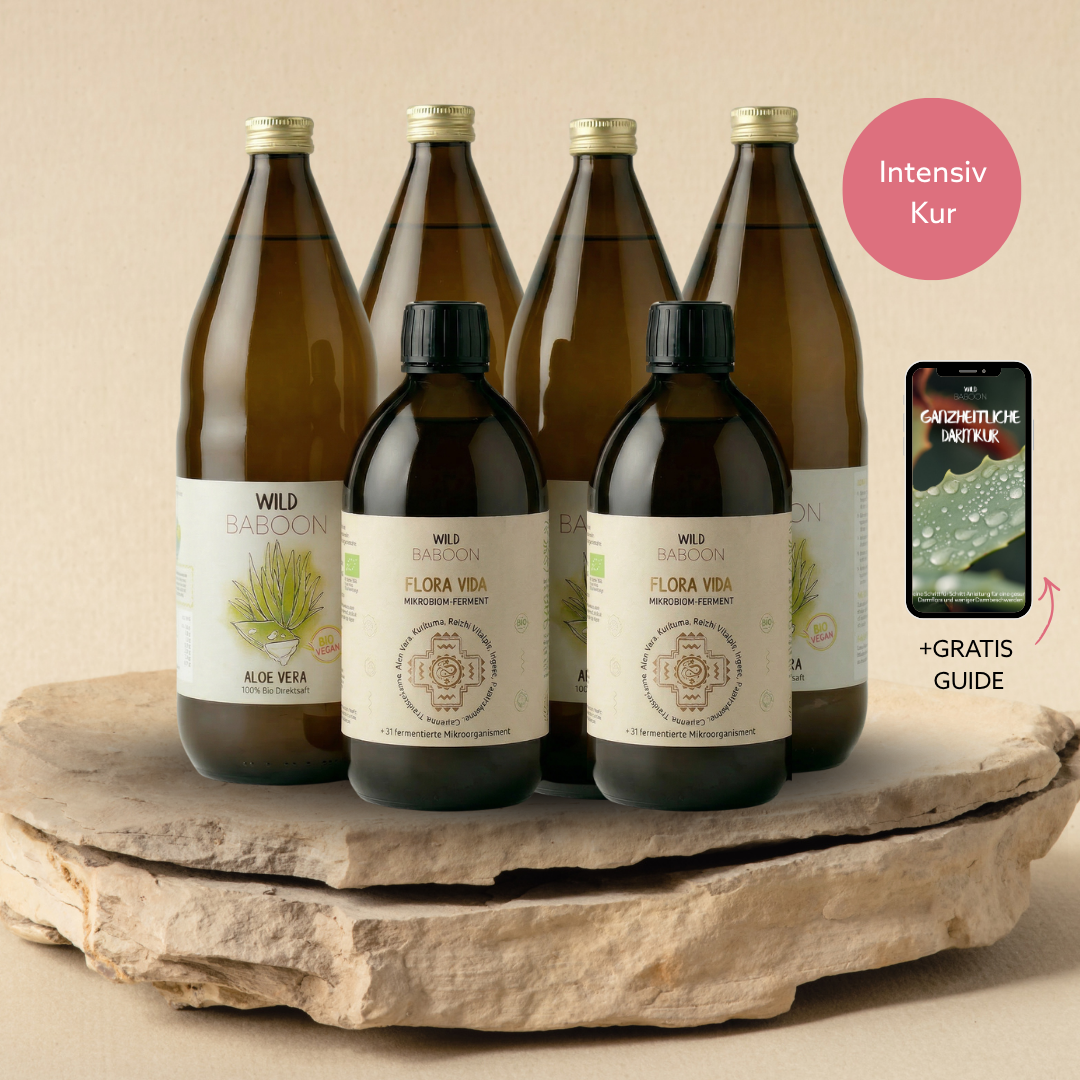
A fiber-rich diet can support the adrenal glands and reduce the production of cortisol. Various vitamins, especially vitamins B5, C, and E, are important for the regeneration of the adrenal glands, and minerals such as magnesium and zinc also support them. You can find these nutrients in a variety of foods, including the Aloe Vera plant and our Wild Baboon Aloe Vera Direct Juice.
Promoting Gut Health
The gut is one of the most important organs in our body and, in addition to digestion, is also crucial for a functioning immune system and the absorption of important nutrients. Therefore, it makes sense to support your gut during hormonal changes.
For this, we recommend a fiber-rich diet with foods such as whole grains, fruits, vegetables, and legumes.

Additionally, you should rely on probiotic, prebiotic, and fermented foods, as all of them demonstrably support your gut flora. We would like to highlight our ferment FLORA VIDA, a microorganism complex with 31 bacterial strains, as well as ginger, turmeric, aloe vera, and other medicinal plants. All ingredients have been fermented multiple times, and all bacteria reach the gut thanks to gastric resistance, where they can fully unfold their potential.
You can read here exactly how fermented foods work and which foods belong to them. We have also described in detail how gut rehabilitation works, which may also be useful after stopping the pill.
Stopping the Pill: Detox and Fasting afterwards
If you want to detoxify your body even more thoroughly, we recommend a fasting cure. Alkaline fasting is a mild and simple form of fasting that is suitable for everyone.
Your diet then consists only of purely alkaline or base-forming foods such as fruits, vegetables, herbs, salads, potatoes, and sprouts. You can find instructions and further information on the topic of detoxification and fasting here.
Integrate medicinal plants into your diet
In addition to classic foods to support your body and supply it with important nutrients, certain medicinal plants are also known to support your hormone balance.
Aloe Vera is a versatile medicinal plant known for its numerous health benefits. Due to these diverse properties, it is the perfect companion during your hormonal transition.

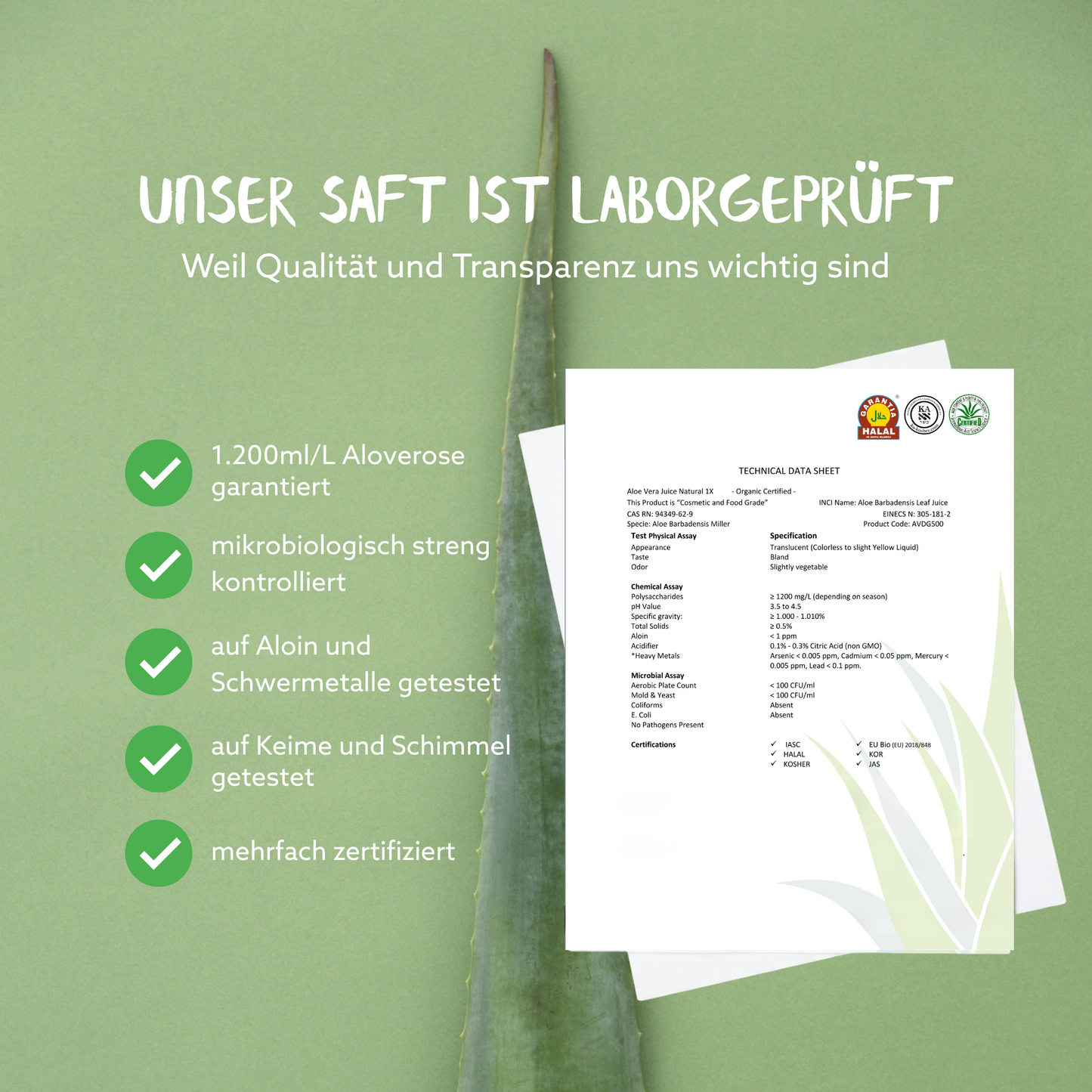
Its over 200 proven ingredients include valuable vitamins, minerals, trace elements and amino acids, such as vitamins A, B, C, E and zinc, selenium and calcium. The multiple sugar Aloverose with attached protein molecules, which has antibacterial, antiviral, antifungal (against harmful fungi) and anti-inflammatory effects, is particularly important. All information can be found in this study.
Furthermore, Aloe Vera is known for its positive effect on digestion. It can promote gut health by supporting the gut flora and reducing inflammation in the digestive tract. A Chilean study examined the prebiotic properties of the Aloe Vera plant and its ingredients aloverose and fructans. It was proven that these two polysaccharides serve as food for good gut bacteria, and the Aloe Vera plant can thus support the population growth of bifidobacteria in the gut. Healthy digestion is crucial for hormone regulation, as a healthy gut forms the basis for optimal nutrient absorption and hormone production.
ℹ️ INFO: In traditional Indian Ayurvedic medicine, Aloe Vera is also known to support female sex hormones.
We recommend a 6-week Aloe Vera juice cleanse, which you should ideally start a few weeks before stopping to strengthen and optimally prepare your body. Drink 40 ml of Aloe Vera Direct Juice daily in the morning and evening on an empty stomach or with breakfast/dinner. After opening, refrigerate and consume within 2-3 weeks.

In addition to Aloe Vera, there are other medicinal plants known to support your body in hormone regulation:
- Lady's Mantle Tea: Drink two cups daily, as it can help stabilize hormone balance.
- Chasteberry (Agnus Castus): Chasteberry can support hormone production, but you should pay attention to a low dosage.
- Maca: The Peruvian plant contains many amino acids that effectively regulate estrogen levels and thus the balance of female hormones. It also increases energy levels, libido, concentration, and strengthens health.
- Ashwagandha: This adaptogen increases the body's stress resistance and regulates cortisol levels by supporting adrenal function.
- Yarrow: Yarrow is traditionally used to regulate the menstrual cycle and alleviate menstrual discomfort. It can especially help with irregular periods, which is typical after stopping the pill.
- Nettle: Nettle is rich in vitamins and minerals and supports adrenal health and blood purification. It can help regulate hormone balance (25% nettle leaves, along with other important herbs, can be found in our Green & Clean herbal tea)
- Siberian Ginseng: This adaptogen also helps the body with stress management and supports adrenal function.

Why stop taking the pill?
Many women want to stop taking the pill to pursue their desire to have children and get pregnant. However, there are also reasons to stop taking the pill without wanting to start a family, but rather, on the contrary, to change contraception methods. While the pill is currently one of the safest contraceptives on the market, taking hormones does not come without side effects and health risks.
These include:
- Increased risk of thrombosis
- Increased risk of heart attack and stroke
- PCOS (Polycystic Ovary Syndrome = hormonal disorder)
- Hair loss
- Breast changes
- Weight fluctuations
- Mood swings
- Decreased libido (sexual desire)
- Cycle problems such as breakthrough bleeding
- Skin problems
- Severe headaches
- Jaundice
- High blood pressure
Due to these side effects and risks, it is often advisable to stop taking the pill. In addition, stopping the pill can bring benefits. Often, women feel generally better afterward and feel able to perceive their emotions and themselves better, which overall leads to an increased quality of life.
But what exactly is the pill and how does it work? The classic pill contains the sex hormones estrogen and progestin, which prevent ovulation and the buildup of the uterine lining. This means no fertilization can occur, and implantation of sperm is hindered. This pill is taken for 3 weeks, followed by a one-week break during which the so-called withdrawal bleeding (hormone withdrawal bleeding) occurs. A new pack is then started.

There is also a mini-pill, which contains only the hormone progestin and is taken continuously without a break.
FAQs - Frequently Asked Questions
When should I stop taking the pill?
Ideally, at the end of a blister pack to avoid breakthrough bleeding.
What side effects can occur after stopping the pill?
Possible side effects include mood swings, skin impurities, hair loss, and an irregular cycle (however, all are only temporary).
How can I regulate my hormone balance?
Ensure sufficient sleep, exercise, stress management, a balanced diet, the intake of specific medicinal plants like Aloe Vera, and support for your organs.
What happens when you stop taking the pill?
Your hormone levels were artificially influenced while taking the pill and now need to regulate themselves again from one day to the next. This leads to a hormonal imbalance in your body, which can be accompanied by various side effects, affecting about half of women. But don't worry, it's all temporary until your hormone balance has regulated itself!
How should one stop taking the pill to get pregnant?
Since every body is unique, it can take varying amounts of time until the desire to have children is fulfilled. If you support your body in hormone regulation, you can increase your chances of it happening sooner.
How should one stop taking the pill to switch to an IUD?
The IUD is inserted during bleeding (typically a normal cycle). Since the cycle after stopping the pill is irregular and may be absent for several months, it makes sense to insert the IUD during the last withdrawal bleeding immediately after stopping. This way, you are immediately protected.
Can you stop taking the pill without considering anything?
We recommend stopping the pill only at the end of the blister pack and taking 40ml of organic Aloe Vera Direct Juice from Wild Baboon in the morning and evening.
How long does it take for the pill's hormones to leave the body?
Every body is different, so it may take a while for your hormone balance to function naturally again. Generally, the hormones are broken down in the blood after a maximum of six weeks. However, this does not mean that the natural cycle immediately functions normally. The body's own hormone production often needs several months to re-regulate.
When does the first real period occur after stopping the pill?
Initially, a so-called withdrawal bleeding usually occurs, which is still caused by hormone withdrawal. The first natural period follows within 4-8 weeks for many women. If it is absent for longer than 3-6 months, it should be checked by a gynecologist, as there is a risk of post-pill amenorrhea.
Is it normal to get acne or skin problems after stopping the pill?
Yes, skin problems are very common after stopping. While taking it, the pill suppresses male hormones (androgens) that influence sebum production. After stopping, their activity temporarily increases, which can lead to pimples or oilier skin. In most cases, this regulates itself within a few months.
Can I get pregnant immediately after stopping?
Yes. Ovulation can occur in the very first cycle after stopping, even before the first period. If you do not wish to become pregnant, you should therefore switch directly to an alternative method of contraception.
What can I specifically do to support my body after stopping?
Sufficient sleep, stress reduction, regular exercise and a nutrient-rich diet with sufficient protein, healthy fats and fiber are helpful. The support of the intestines and liver is also particularly important, as they are involved in hormone metabolism. We recommend 40ml in the morning and evening Aloe Vera Direct Juice.
Patience also plays a central role, as the body usually needs several months to regain its hormonal balance.
Do you have experience with stopping the pill? Then feel free to share it with us on social media! 💌