
Aloe Vera is an extraordinary plant. It contains over 200 proven nutrients and thus provides great support for the body in many ways. But Aloe Vera can not only help us to more vitality and health; it also helps our four-legged friends with problems of all kinds. The special thing about the Aloe Vera plant is that it can be used by anyone, anywhere.
A variety of studies deal with the exact mode of action of Aloe Vera in humans and animals. However, it is certain that it has a de-acidifying, detoxifying and anti-inflammatory effect. In addition, the plant can stimulate the metabolism and naturally lower blood sugar. Horses can be helped with various ailments, because supplementing with Aloe Vera can also lead to the following:
- Increased activity
- A strengthened and stimulated immune system
- Increased physical and mental resilience
- Support for the formation of a healthy intestinal flora
- Prevention of complaints caused by intestinal diseases
- Can reduce loose stools
- Prevents colic
- Can significantly reduce the likelihood of laminitis
- Prevents fungal infections
- Joint problems are prevented by cartilage regeneration and collagen formation
- Support for infections with persistent coughs
My first-hand experience report
My Hanoverian mare, Polly, always had a metabolic problem that alternately led to uncontrolled weight gain, loose stools, colic, and digestive difficulties. Aside from the impairments during riding that this illness and its symptoms brought with them, my horse was therefore not in the best condition.
Her loose stools had just started again, and her belly was getting bigger, when I first came into contact with Wild Baboon products. The Aloe Vera direct juice particularly caught my attention, so I tried it for myself. After some time, an idea came to me. The products helped me well, so why not my horse?
In the following weeks, I therefore refrained from all possible supplements for Polly that I had used before, but which unfortunately did not bring the desired long-term effect, and replaced them with 100ml of Aloe Vera direct juice daily. I could simply mix the juice into the feed Polly gets every day. Initially, I was concerned she wouldn't eat the feed, as she had always been a bit picky about that, but my worries were unnecessary. Without batting an eye, she accepted the new feed mix. Animals apparently know what's good for them.

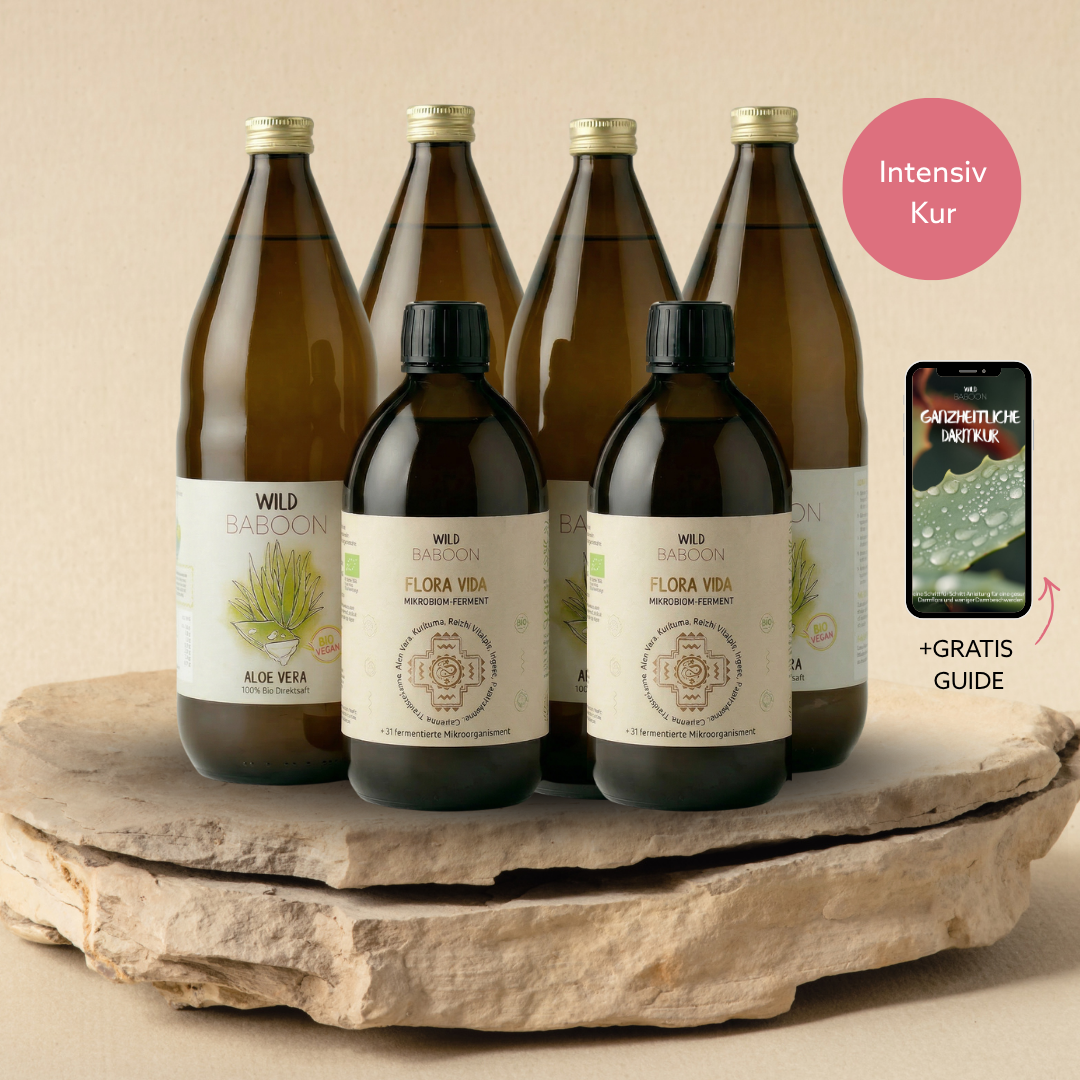
I had planned the course for 6 weeks. About 4 organic Aloe Vera juice bottles are enough for this. It is best to order 6 bottles at a special price, save 10€ and use the juice for yourself too.
Initially, there were hardly any changes noticeable in Polly, but only a few days had passed. Like many homeopathic remedies, the active ingredients of the Aloe Vera plant need a little time to unfold their effect. Initially, it may even be that one notices setbacks, as the body first has to get used to the newly present substances. Over time, clear progress was evident.
After just a few weeks, the loose stools subsided and Polly's weight decreased. It wasn't much and probably hardly noticeable to outsiders, but I, who works with my horse almost daily, could definitely see the progress. Her metabolism also seemed to be working better; she finally looked vital again.
Towards the end of the course, the progress decreased, and fewer and fewer positive changes could be observed. However, no negative ones either, which in Polly's case alone is a great step forward. So I can say that her condition generally changed for the better. At some point, my mare stopped eating the feed. This fit my fears that the extent of Aloe Vera's healing power seemed to be exhausted in my horse.
In conclusion, I can say that the use of Aloe Vera has helped us a lot. Many complaints that Polly had struggled with for years without change improved and have not returned even weeks after the course. It remains to be hoped that this change will be sustainable. Otherwise, I will definitely resort to Aloe Vera juice again. Probably such a course is useful 1-2 times a year or simply as long as the horse likes to eat the feed with Aloe Vera.
Do you have similar problems with your horse and know the despair when nothing helps? Then just try the Aloe Vera direct juice from Wild Baboon. Simply mix the juice as a supplement into the feed - about 8cl per 100kg - and you're done!
💡 TIP: The juice also works very well for summer eczema in conjunction with the topical application of organic Aloe Vera gel for dogs, cats, and horses. Read our article about it here.
Try it out and tell us about your experiences - we look forward to hearing from you!